Super Typhoon Rai slams into Philippines: tens of thousands evacuated
- The storm, known locally as ‘Odette’, knocked out power, toppled trees and ripped off roofs with winds of 195km/h
- More than 98,000 have sought emergency shelter and evacuations are still under way. It is the second super typhoon since September

A powerful typhoon slammed into the southeastern Philippines on Thursday, toppling trees, ripping tin roofs and knocking down power as it blew across island provinces where nearly 100,000 people have been evacuated.
Coast coast guard personnel were rescuing residents stranded by chest-deep waters in a southern province, where pounding rains swamped villages in brownish water. In southern Cagayan de Oro city, footage showed two rescuers struggling to keep a month-old baby inside a laundry basin above the waters and shielded from the wind and rain with an umbrella.
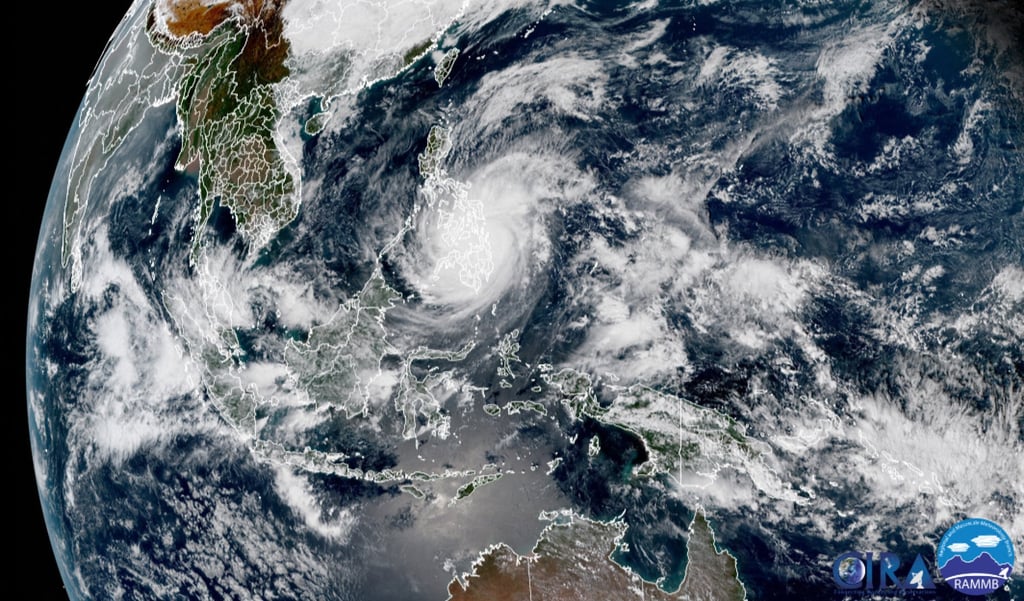
Forecasters said Typhoon Rai further strengthened with sustained winds of 195 kilometres (121 miles) per hour and gusts of up to 270kph (168mph) as it blew from the Pacific Ocean into the Siargao Islands. There were no immediate reports of casualties or major damage.
“I’m scared and praying here in my house that this stops now. The wind outside is so strong it’s cutting down trees,” Teresa Lozano, a resident of eastern MacArthur town in coastal Leyte province, told DZMM radio by telephone, adding roofs of nearby houses were damaged and that her farming village had lost power.
Disaster-response officials said about 10,000 villages lie in the projected path of the typhoon, which has a 400-kilometre 248-mile)-wide rain band and is one of the strongest to hit the country this year.
The coastguard said it has grounded all vessels, stranding nearly 4,000 passengers and ferry and cargo ship workers in dozens of southern and central ports. Several mostly domestic flights have been cancelled and schools and workplaces were shut in the most vulnerable areas.
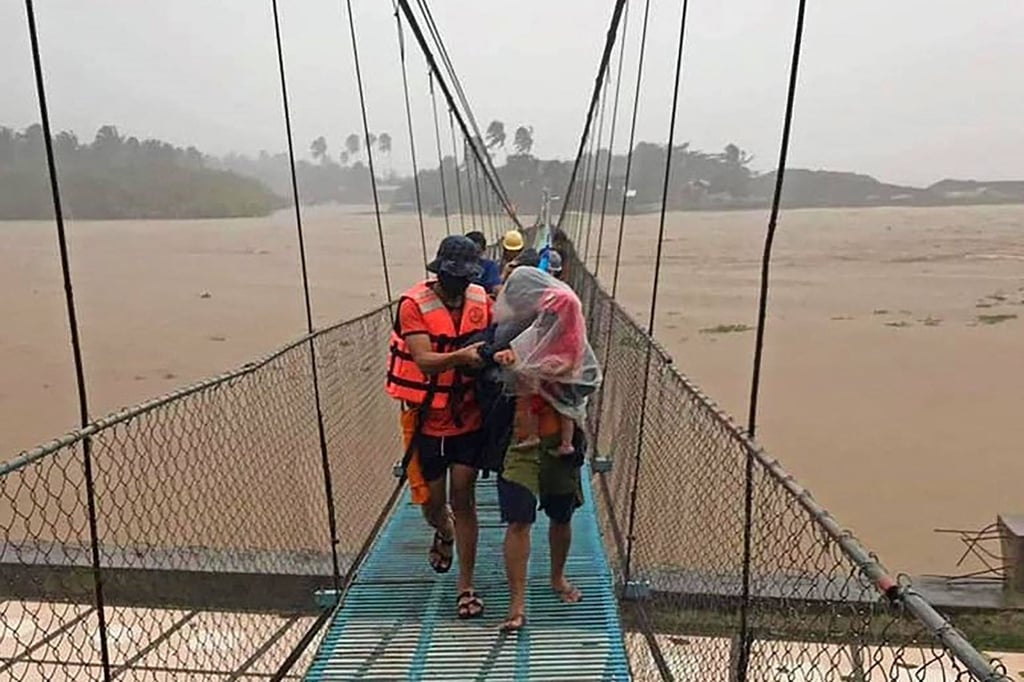
More than 98,000 people have been evacuated to safety, the government’s disaster-response agency said. Crowding in evacuation centres was complicating efforts to keep people safely distanced after authorities detected the country’s first infections caused by the omicron variant of the coronavirus. Intensified vaccinations were also halted in provinces likely to experience stormy weather.