-
Advertisement
Religion
AsiaSoutheast Asia

Asia’s Muslims celebrate 1st Eid after Covid curbs eased: ‘Words can’t describe how happy I am’

  • Millions of Indonesians rejoiced at the return of the tradition of homecoming after two years, as Malaysian Muslims filled bazaars and shopping malls
  • For others, the festivities were dampened by conflict and economic hardship – with India’s Muslims reeling from vilification by hardline Hindu nationalists

Reading Time:3 minutes
Why you can trust SCMP
1
Children play during Eid al-Fitr prayers at a field in Depok, Indonesia, on Monday. Muslims around the world are celebrating the three-day festival marking the end of the holy fasting month of Ramadan. Photo: EPA-EFE
Associated Press
This year, Muslims around the world are observing Eid al-Fitr – typically marked with communal prayers, celebratory gatherings around festive meals and new clothes – in the shadow of a surge in global food prices exacerbated by the war in Ukraine.

Against that backdrop, many are still determined to enjoy Eid, which began on Monday in many Muslim-majority countries and marks the end of the Islamic fasting month of Ramadan, amid an easing of coronavirus restrictions in their countries. For others, the festivities have been dampened by conflict and economic hardship.
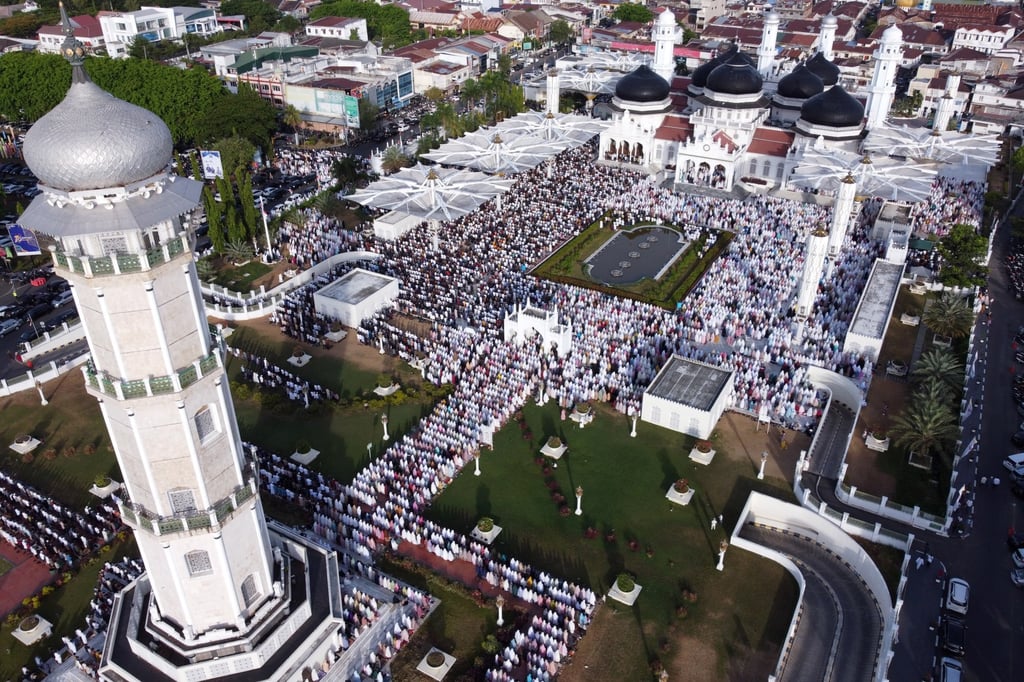
At the largest mosque in Southeast Asia, tens of thousands of Muslims attended prayers on Monday morning. The Istiqlal Grand Mosque in Indonesia’s capital Jakarta was closed when Islam’s holiest period coincided with the start of the coronavirus pandemic in 2020 and was closed to communal prayers last year.
Worshippers take part in Eid al-Fitr prayers at Baiturrahman Grand Mosque in Banda Aceh, Indonesia, on Monday. Photo: EPA-EFE

“Words can’t describe how happy I am today after two years we were separated by pandemic. Today we can do Eid prayer together again,” said Epi Tanjung after he and his wife worshipped at another Jakarta mosque. “Hopefully all of this will make us more faithful.”

Advertisement
The war in Ukraine and sanctions on Russia have disrupted supplies of grain and fertiliser, driving up food prices at a time when inflation was already raging. A number of Muslim-majority countries are heavily reliant on Russia and Ukraine for much of their wheat imports.

Even before the Russian invasion, an unexpectedly strong global recovery from the 2020 coronavirus recession had created supply chain bottlenecks, causing shipping delays and pushing prices of food and other commodities higher.
Advertisement

Muslims follow a lunar calendar, and methodologies, including moon sighting, can lead to different countries – or Muslim communities – declaring the start of Eid on different days.

Advertisement
Select Voice
Select Speed
1.00x