Thailand tweaks cannabis rules as lawmakers lash out at recreational use
- Sales to students or through vending machines or electronic or online channels are now prohibited, as is commercial advertising
- Licensed businesses must also report to the government the amount of ‘controlled herb’ – now defined only as cannabis buds – that they have in stock

Licensed businesses must also report to the government the amount of controlled-herb stocks they hold and details of the sourcing and uses. Businesses are required to tell the government each time they export controlled herbs.
“The previous version listed the whole cannabis plant as controlled, which made it difficult to be used for medical, health and economic purposes,” said Thongchai Lertwilairattanapong, director general of the Department of Thai Traditional and Alternative Medicine. “As the draft bill is not yet complete, we need to control it in ways that still allow beneficial uses.”
Sales to students or through vending machines or electronic or online channels are now also prohibited, as is commercial advertising.
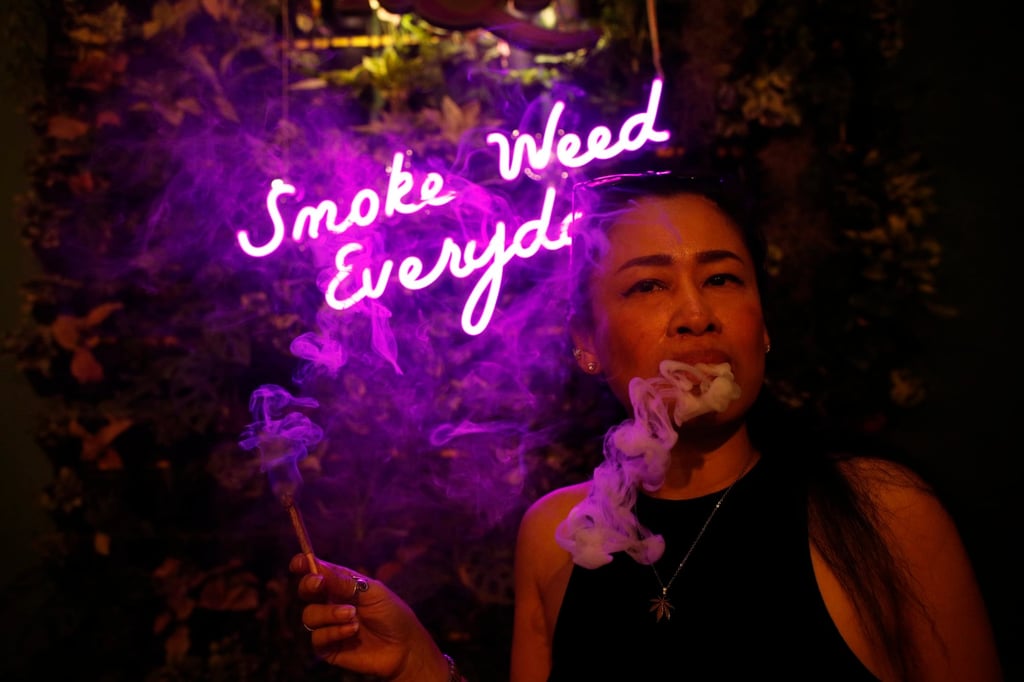
Since Thailand’s landmark decriminalisation on June 9, the government has repeatedly said the move was aimed at medical and commercial use and has frowned upon recreational use – though it always stopped short of an explicit ban. However, extracts that contain more than 0.2 per cent of the psychoactive component, tetrahydrocannabinol (THC), remain illegal.
The move to decriminalise prompted a prominent medical doctor and five opposition lawmakers to petition an administrative court on Thursday to revoke the June 9 law, citing concerns over recreational use of the plant.