In Vietnam, Hanoi’s incense artisans keep a ‘core’ 100-year tradition alive
- Younger generations are losing interest in the profession but the trade is unlikely to disappear as incense is a ‘core element of spiritual life’ in Vietnam
- Over 300 families make incense in the village all year, with each worker earning 5 million and 8 million Vietnamese Dong per month (US$210-340)

In Quang Phu Cau village, an hour south of Hanoi, Nguyen Dinh Vinh looks out over a sea of crimson. In the courtyard before him, tens of thousands of incense sticks appear in bundles – like explosions of burgundy, maroon and ruby – as they dry in the intense midday sun.
“Everyone in Quang Phu Cau makes incense,” Dinh Vinh said, as he surveyed the mesmerising array of reddened bamboo before him in the visitor centre. “We even had to hire workers from other places.”
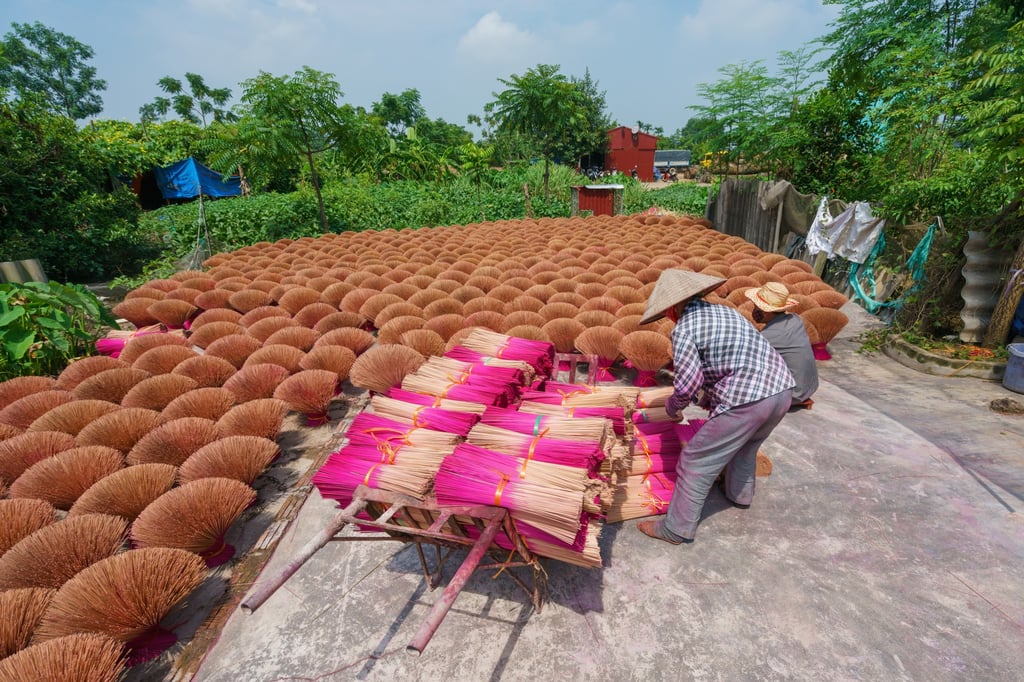
The villagers have made the joss sticks here for more than a century. On average, workers in this cottage industry collect 200 tonnes of material and produce 50 tonnes of incense every month.
The result is a hypnotic assembly of dyed bamboo bundles that can bring in as many as five hundred visitors every day on the weekend, according to Dinh Vinh, who is now 65, but started making incense when he was just six years old.
In the past, workers in the village split the wooden sticks by hand when making joss sticks, but these days, they use machines.
“It takes many stages to make incense,” Dinh Vinh said. “First, you have to go to the forest to gather bamboo. Then, you take it to the workshop and whittle it down into incense sticks. After that, we dye the incense before dipping it in a flavoured pink paste … and leaving it out to dry for a few days.”