Thailand’s fishermen fight extreme bright-green marine ‘dead zone’: ‘this is the first that I’ve seen it so bad’
- Mussel farmers say they’ve racked up ‘unfathomable’ losses from an intense plankton bloom off the east coast that’s turning the sea a bright green
- While the exact cause remains unclear, scientists believe pollution and the recent intense heat – as a result of climate change – are to blame

Marine scientists say some areas in the Gulf of Thailand have more than 10 times the normal amount of plankton, turning the water a bright green and killing off marine life.
“This is the first that I’ve seen it so bad,” said marine scientist Tanuspong Pokavanich. “It is very severe.”
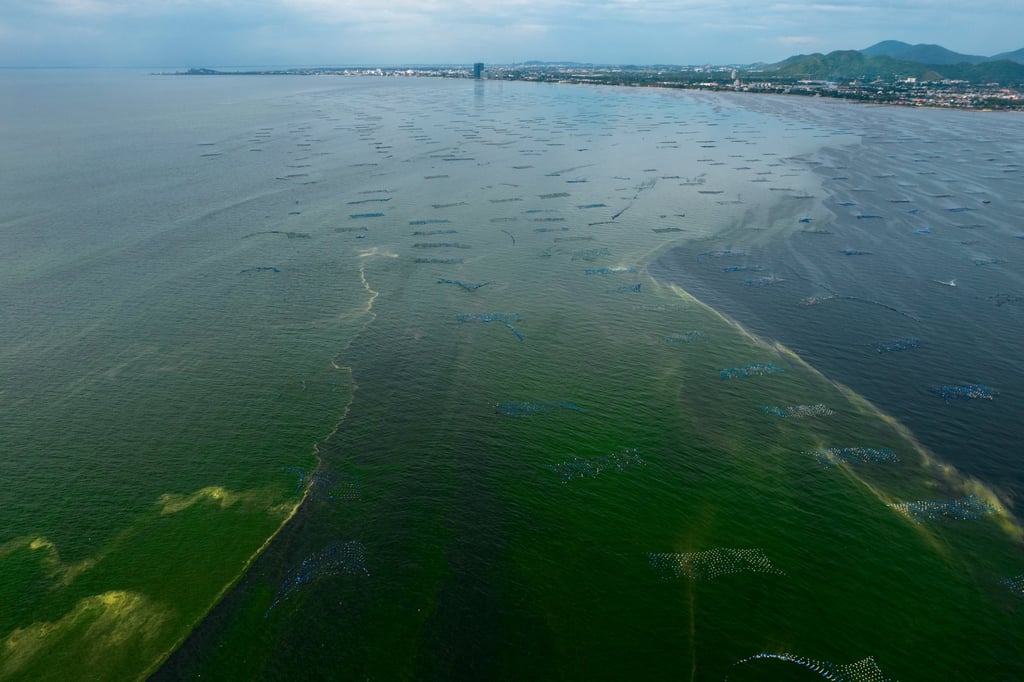
Plankton blooms happen one or two times a year and typically last two to three days, experts say. They can produce toxins that harm the environment, or they can kill off marine life by depleting the oxygen in the water and blocking sunlight.
Chonburi’s coasts are famous for their mussel farms, and more than 80 per cent of the almost 300 plots in the area has been affected, said Satitchat Thimkrajong, president of the Chonburi Fisheries Association.
Fisherman Suchat Buwat’s plot was one of those affected. He said the bloom had caused him losses of more than 500,000 baht (US$14,000), with his peers also racking up “unfathomable” losses.
While the cause of the intense plankton bloom remains unclear, scientists believe pollution and the intense heat caused by climate change are to blame.