Advertisement
Indonesia said it would cut back on coal. But giving up ‘natural wealth’ isn’t easy
- Loopholes have allowed existing power plants such as Suralaya room for expansion, while the government’s pledges also exclude so-called captive coal
- Residents worry about pollution and lost livelihoods, as analysts say captive coal plants could risk derailing Indonesia’s energy transition goals
3-MIN READ3-MIN

Sania sits in front of her home in Indonesia, less than a kilometre from Southeast Asia’s biggest coal complex, where chimneys pump dark grey smoke and a chemical smell into the air.
As countries gather in Dubai for crunch climate talks, the future of polluting fossil fuel coal will be high on the agenda.
For some, the age of coal is now clearly over, and Indonesia has committed to moving away from the fuel despite being the world’s top exporter.
Advertisement
But it is adding two more units to the Suralaya power plant, in Banten province next to the capital Jakarta, and has plans for new plants to power its nickel industry – key to the electric-vehicle boom.
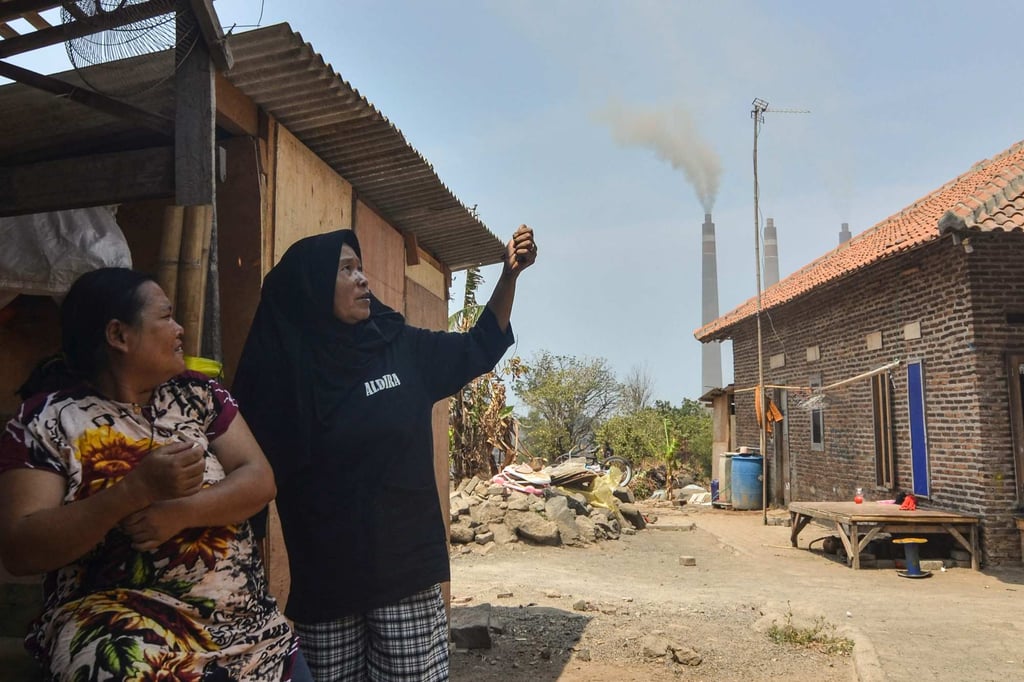
Sania, a 37-year-old housewife, who like many Indonesians goes by one name, is dreading the Suralaya expansion.
Advertisement
“I am very worried. It’s been very scary. I want to move out if I can because our house is too near to the plant,” she said.
Advertisement
Select Voice
Select Speed
1.00x