Advertisement
In Indonesia, Bali’s salt farmers are a dying breed, who harvest ‘white gold’ in dark sands
- In Bali, salt is harvested by hand from the sea by farmers, whose craft of collecting ‘white gold’ has become a dying art
- Today, the condiment is mostly produced industrially – and is often inferior and consists of 100 per cent sodium chloride
3-MIN READ3-MIN
1

Nyoman Warta laboriously carries seawater in two simple containers to the beach of Kusamba, a coastal village located on the island of Bali, in Indonesia.
As is the tradition, he balances them on a pole that rests heavily across his shoulders, and then pours the contents with deliberate care into the dark sand.
As the head of the family, Warta enthusiastically runs the small traditional business and proudly shows interested tourists how salt is produced.
His grandmother was involved in the salt business here, in the Klungkung province. The region lies roughly halfway between the popular holiday resorts of Sanur and Candidasa on the island’s eastern coast.
“There are only about five of these traditional salt farms left in Bali, and almost all of them are here in the east of the island,” says tour guide Putu Surya, who is happy to show holidaymakers this unknown side of Bali.
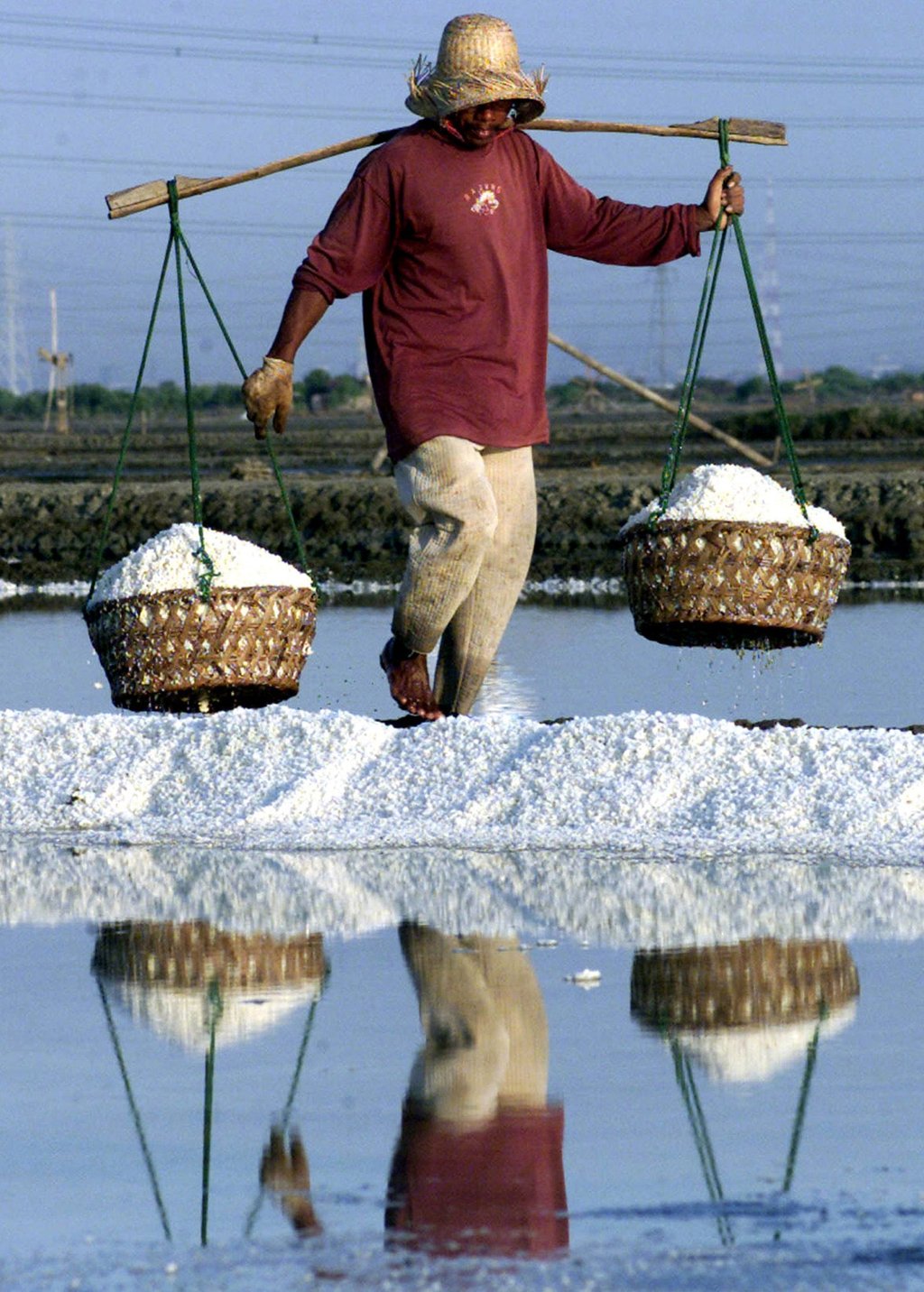
Salt used to be called “white gold,” that’s how valuable and sought-after the crystalline solid once was.
Advertisement
Select Voice
Select Speed
1.00x