Advertisement
Japan can now deploy its forces to Philippines under landmark defence pact
- The Reciprocal Access Agreement also allows Filipino forces to enter Japan for joint drills and is the first to be forged by Tokyo in Asia
3-MIN READ3-MIN
4
01:38
Japan can now deploy its forces to the Philippines under landmark defence pact
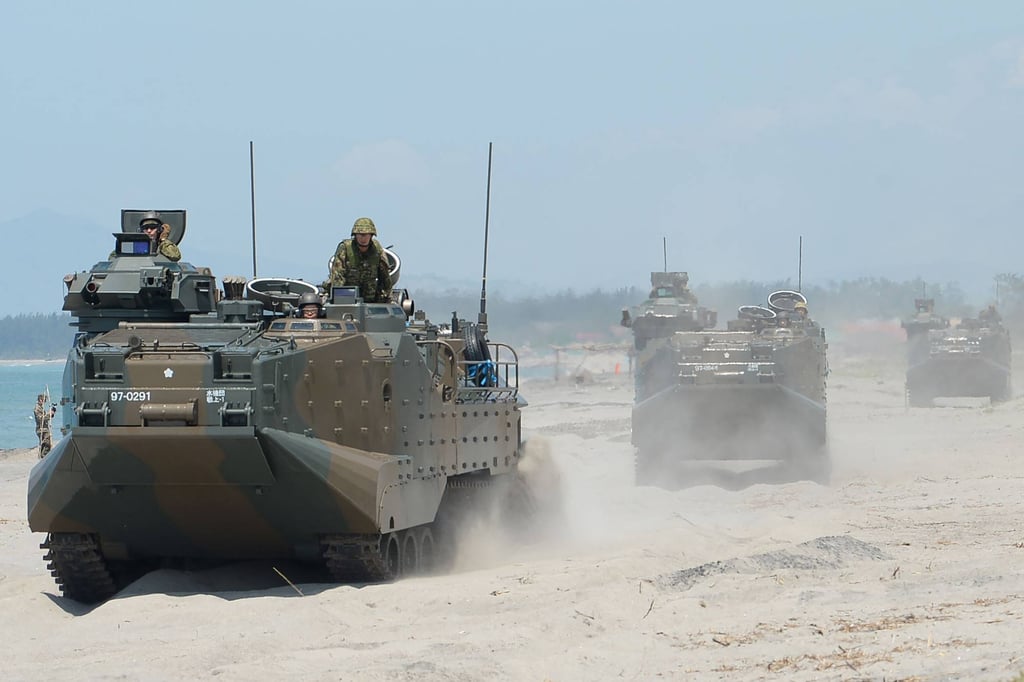
Japan and the Philippines signed a key defence pact on Monday allowing the deployment of Japanese forces for joint military exercises, including live-fire drills, to the Southeast Asian nation that came under brutal Japanese occupation in World War II but is now building an alliance with Tokyo as they face an increasingly assertive China.
The Reciprocal Access Agreement, similarly allows Filipino forces to enter Japan for joint combat training, was signed by Philippine Defence Secretary Gilberto Teodoro and Japanese Foreign Minister Yoko Kamikawa in a Manila ceremony witnessed by President Ferdinand Marcos Jnr It would take effect after ratification by the countries’ legislatures, Philippine and Japanese officials said.
Kamikawa called the signing of the defence agreement “a groundbreaking achievement” that should further boost defence cooperation between Japan and the Philippines. “A free and open international order based on the rule of law is the foundation of regional peace and prosperity,” she said. “We would like to work closely with your country to maintain and strengthen this.”
Kamikawa and Japanese Defence Minister Minoru Kihara are in Manila to hold talks with their Philippine counterparts on ways to further deepen relations, the Philippine government said in a statement.
The defence pact with the Philippines is the first to be forged by Japan in Asia. Japan signed similar accords with Australia in 2022 and with Britain last year.
Under Prime Minister Fumio Kishida, the Japanese government has taken steps to boost its security and defensive firepower, including a counterstrike capability that breaks from Japan’s post-war principle of focusing only on self-defence, amid threats from North Korea and China’s growing assertiveness. It’s doubling defence spending in a five-year period to 2027 in a move to bolster its military power and make Japan the world’s third-biggest military spender after the United States and China.
Advertisement
Select Voice
Select Speed
1.00x