Advertisement
Singapore
AsiaSoutheast Asia

Forget air-con, Singapore looks underground for a cooler future

The rapidly warming city state has among the highest per capita use of air conditioners in the Asia-Pacific

3-MIN READ3-MIN
Underground cooling pipes are seen installed beneath Singapore’s Marina Bay Sands Hotel. Photo: AFP
Bloomberg
Deep underneath Singapore’s northeastern district of Punggol, a 5km (three-mile) network of metal pipes roars as it pumps chilled water to cool offices and classrooms overhead.

The 140-year-old concept known as district cooling uses less electricity than centralised air conditioners – a major advantage for a resource-starved tropical island-nation that has to import nearly all its energy and where temperatures are rising twice as fast as the global average.

The city state has laid pipes beneath at least eight neighbourhoods so far, with the Marina Bay network – the world’s largest underground system – having begun operations in 2006. More buildings will be linked up to that system, and separate facilities are being rolled out in other parts of the city by firms like Keppel EaaS.
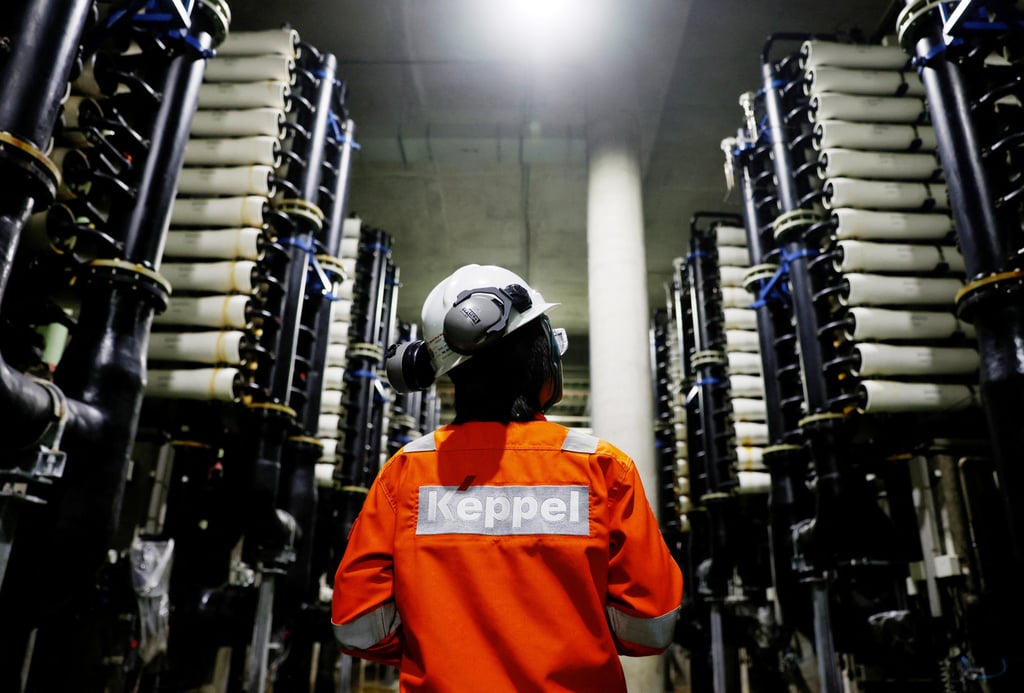
A Keppel employee checks reverse osmosis membrane pipes at a desalination plant in Singapore. Photo: Reuters
The roll-out comes as energy security takes centre stage in countries, including Singapore, that are reeling from energy shortages caused by the US-Iran war, while also bracing for an exceptionally hot summer due to a projected “super El Nino”. District cooling is a solution that is gaining traction around the world, particularly in the Middle East, and is projected to grow to a US$60 billion market by 2034 by one estimate.
Advertisement

“Cooling demand is rising with urbanisation, income growth, heat stress and commercial floor-area expansion” across Southeast Asia, said Lee Poh Seng, professor and head of mechanical engineering at the National University of Singapore.

Singapore had the potential to “demonstrate district cooling systems that credibly deliver energy, water, carbon, comfort, reliability and economic performance under hot and humid conditions”, he said.
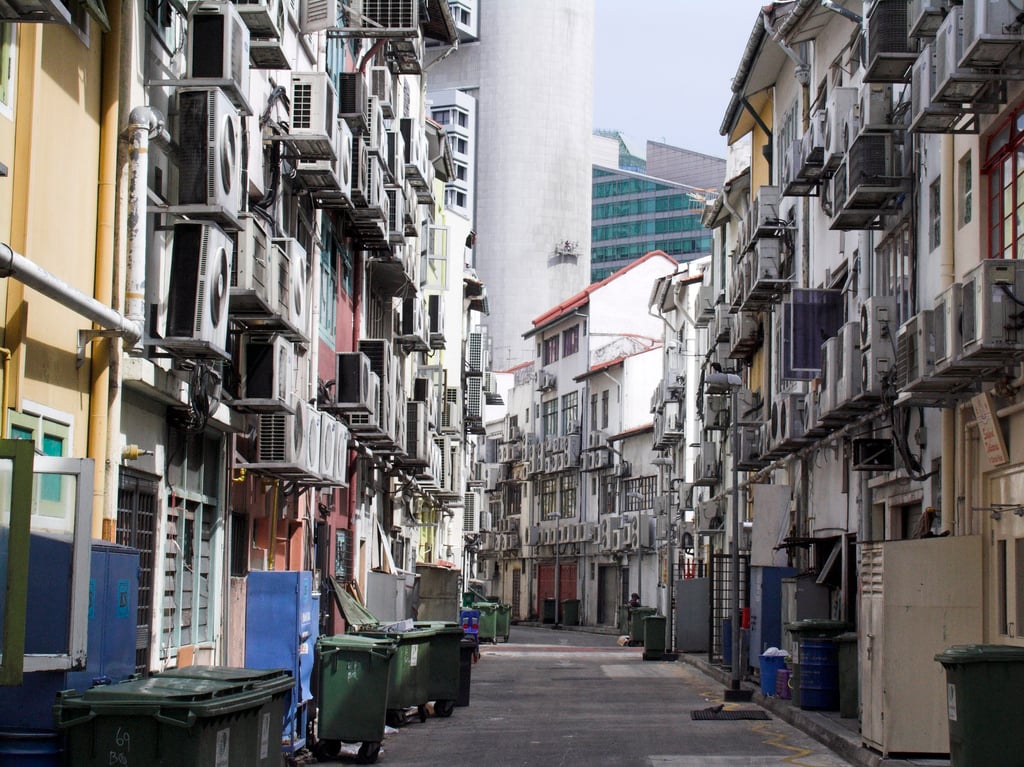
Dozens of air conditioners are seen on the rear of buildings Singapore. The city state has among the highest per capita use of air conditioners in the Asia-Pacific region. Photo: Education Images/Universal Images Group/Getty Images

The local market for the technology could double over the next decade from about 323,000 refrigeration tons today, according to Engie, which is among the world’s largest operators of such facilities. The firm runs two systems in Punggol district capable of cooling about 8,000 public housing units.

Advertisement
Advertisement
Select Voice
Select Speed
1.00x