Filipino mayor begs for helicopters to fly food to ‘very hungry’ quake survivors
The Glan mayor says 10 villages in his town of more than 100,000 people remain inaccessible, mostly due to landslides from Monday’s quake

More than 45,000 people remained displaced, about half in emergency shelters, after the quake damaged more than 12,600 houses in farming towns and cities. Many were still too traumatised to return home due to aftershocks, provincial officials said.
Sarangani reported 20 dead from the quake, the highest toll from the affected provinces, mostly due to a landslide that buried houses in the coastal town of Glan, according to the government’s Office of Civil Defence, which deals with major disasters.
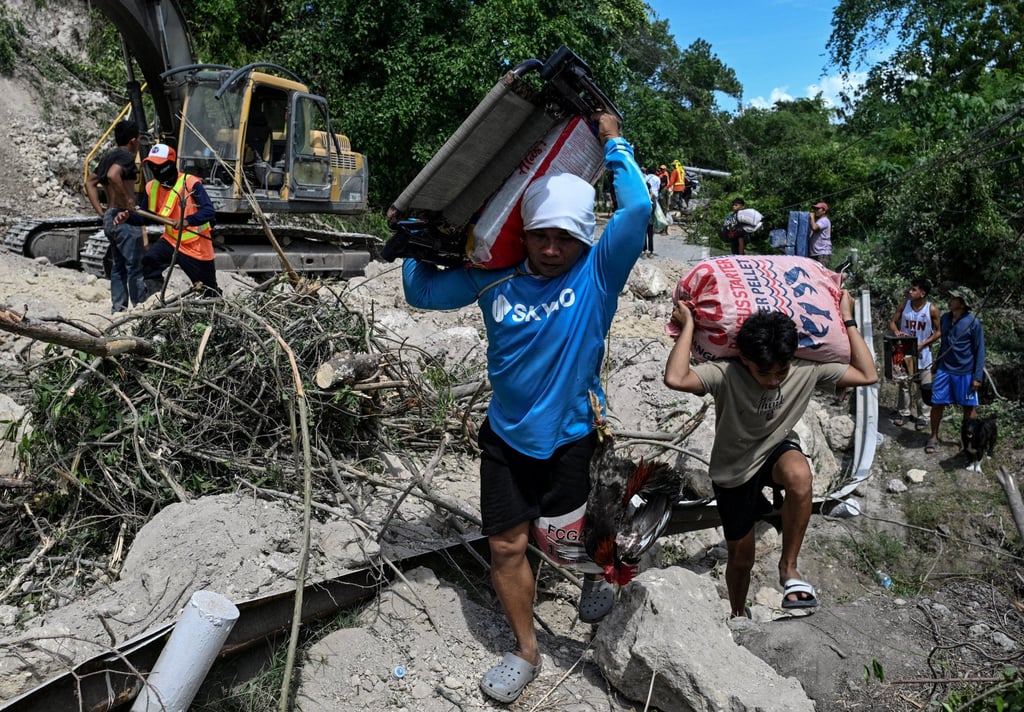
Glan Mayor Victor James Yap said power had not been restored to his province and 10 of 31 villages in his town of more than 100,000 people remained inaccessible, mostly due to landslides. He asked the government to immediately deploy air force helicopters to deliver food and other aid to the stricken areas.
“We need food and water but it’s difficult to transport them to some of our villages which remain isolated,” Yap told DZMM radio network. “Choppers are needed to transport food because people there are already very hungry.”