Shock waves from Lin Biao plane crash still echo in lead-up to Chinese Communist Party leadership reshuffle
Death of Mao Zedong’s handpicked successor in Mongolia during defection attempt led to Deng Xiaoping’s introduction of a more consultative system

The reverberations from a plane crash 45 years ago, when a Trident 1E airliner slammed into the Gobi Desert in eastern Mongolia, killing all those on board, opened the eyes of many people in neighbouring China.
That’s because one of the dead was Communist Party leader Mao Zedong’s hand-picked successor, Lin Biao.
He found Mao had never intended to build up a democratic centralism system in the party
The death of the “Great Helmsman’s” chosen heir in such mysterious circumstances at the age of 64 was central to the toppling of the Mao myth and the ending of the Cultural Revolution.
Sun Yixian, a Chinese diplomat who visited the site two days after the crash, taking hundreds of photographs for Beijing, said none of the Chinese and Mongolian officials who visited the scene realised there was any connection with Lin because Beijing had tried to cover it up, claiming the crashed jetliner was just an ordinary Chinese civil aircraft, even though the Mongolians argued it was a military plane because some key military documents were found at the site. A book by Sun about the affair – On the Other Side of the Desert – The incident of the crash of Lin Biao’s aircraft – was published in 2001.
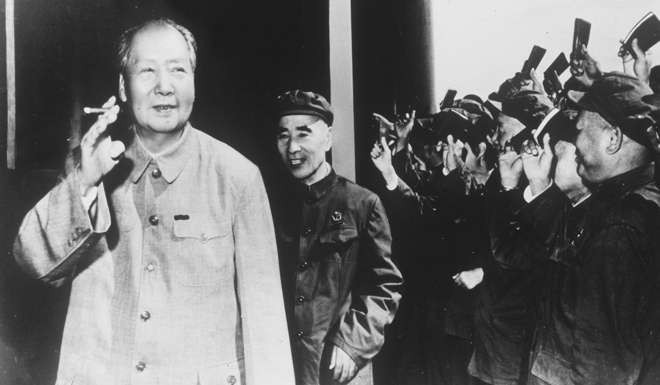
The cover-up could not last for ever. The October 1 National Day parade was fast approaching and the public were expecting to see Mao, Lin, premier Zhou Enlai and other senior leaders atop the Tiananmen gate in Beijing, waving copies of Quotations from Chairman Mao Zedong – the “little red book” compiled by Lin that had become an icon of the ongoing Cultural Revolution.