China’s fight for clean air gets more complicated after scientists link fall in PM2.5 pollutants to rise in crop-damaging ground-level ozone
- Joint US-Chinese study suggests that drive to reduce most harmful particles in the atmosphere is something of a double-edged sword
- Researchers say there is a relationship between a drop in PM2.5 levels and the rise in ground-level ozone pollution, which can reduce crop yields

China’s war on air pollution may have hit an unwelcome snag after new research suggested that reducing the most dangerous small particles in the air had the side effect of increasing ozone pollution on the ground.
The findings could have major implications for the global battle for cleaner air after scientists concluded there was a link between lower levels of fine particulate matter – also known as PM2.5 – and a rise in ozone levels.
In 2013, China put in place stringent policies to regulate PM2.5 levels. They have been so effective that they led to a fall in pollutant levels of as much as 40 per cent in some places, according to a new joint research project between Harvard’s School of Engineering and Applied Sciences (SEAS) and the Nanjing University of Information Science & Technology (NUIST).
However, a rapid fall in PM2.5 levels, which can cause serious damage to the respiratory system, proved to be a double-edged sword.
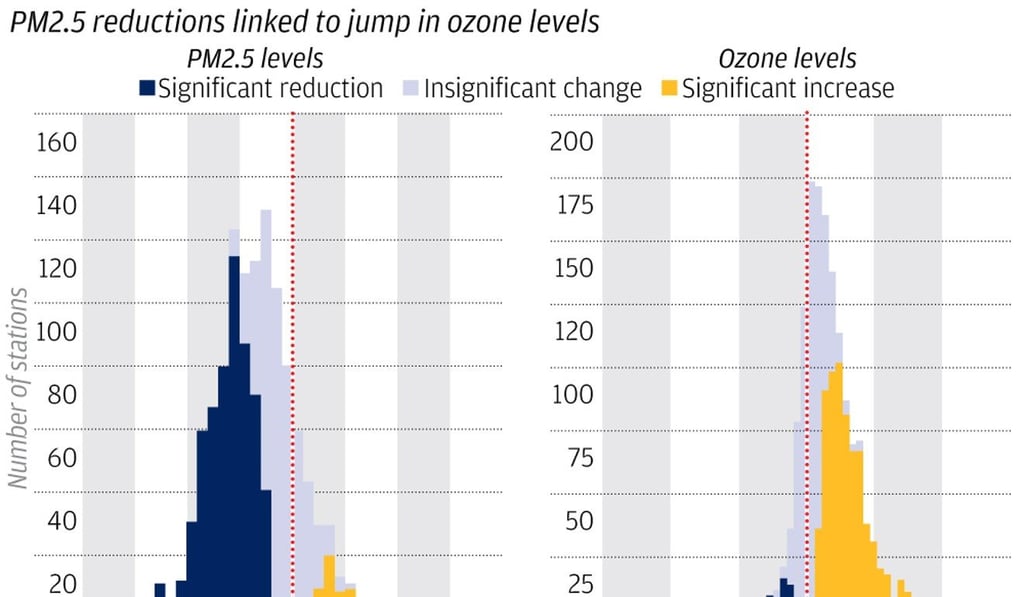
The study, published in the Proceedings of National Academy of Sciences, found that there had a been a sharp rise in harmful ground-level ozone pollution, one of the main components of the notorious smogs found in China’s biggest cities.