An ancient Sherpa relative? 160,000-year-old jawbone found in Tibetan cave sheds light on Denisovans, who survived extreme conditions
- Denisovans lived at extremely high altitude and, through interbreeding, may have passed on gene adaptations for this lifestyle to modern-day Sherpas
- Comprising a powerful jaw and unusually large teeth, the fossil suggests they would have looked something like the most primitive of the Neanderthals

A human jawbone found in a cave on the Tibetan plateau has revealed new details about the appearance and lifestyle of a mysterious ancient species called Denisovans.
The 160,000-year-old fossil, comprising a powerful jaw and unusually large teeth, suggests that these early relatives would have looked something like the most primitive of the Neanderthals. The discovery also shows that Denisovans lived at extremely high altitude and, through interbreeding, may have passed on gene adaptations for this lifestyle to modern-day Sherpas in the region.
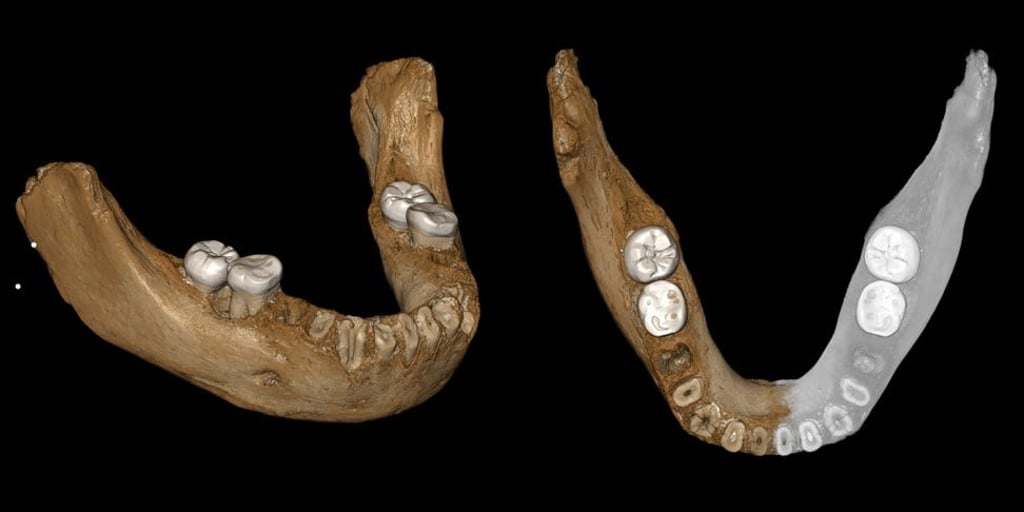
Jean-Jacques Hublin, the director of the department of human evolution at the Max Planck Institute for Evolutionary Anthropology in Leipzig and senior author of the find, described this element as “spectacular”. He said: “Until today, nobody imagined that archaic humans could be able to dwell in such an environment.”
The dating of the mandible suggests that temperatures on the plateau would have been even harsher than today, when temperatures could plunge to -30 degrees Celsius. “It’s a time period colder than now which … blows my mind,” said Hublin. “If you find it a challenging environment today, I recommend you try it [then].”
Previously, the only known Denisovan fossils came from a cave in Siberia, and amounted to a finger fragment, some teeth and a few jagged pieces of bone. Crucially, though, scientists were able to extract DNA from inside the ancient bone and by comparing this with other ancient DNA and present-day populations they learned that the species must once have been widespread across Europe and Asia.