China-South Korea ties face a testing time after Seoul accepts Donald Trump’s G7 invitation
- Accepting invitation to expanded G7 meeting may put trade on the line but Seoul must factor in other challenges in its relationship with Beijing
- Timing of meeting just before US presidential election has implications for nations in talks with Trump

“To Chinese policymakers, President Trump’s invitation to South Korea is a reminder that Seoul is an important member of a US-centred international order, especially in the context of the US-China competition for global influence,” said Ji-Young Lee, Korea policy chair at Rand Corporation, a US non-profit think tank.
While Seoul has a military alliance with the US, China is its biggest economic partner, with trade totalling US$244.3 billion in 2019. Two other countries that have accepted Trump’s invitation to the G7 meeting – India and Australia – also do a lot of business with China. But Moon’s challenge is not just economic, it is also nuclear and related to North Korea.
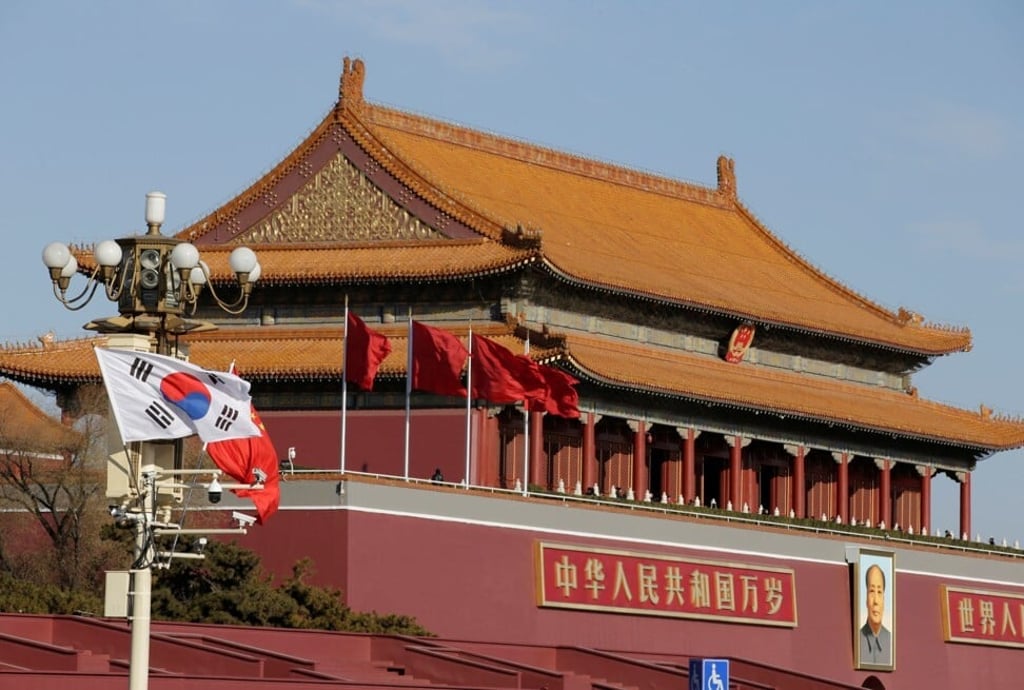
“Out of the three countries that accepted Trump’s invitation to join an expanded G7, South Korea is probably in the most uncomfortable position,” said Qi Huaigao, vice-dean of Fudan University’s Institute of International Studies in Shanghai.
China’s support was essential to Moon’s conciliatory North Korea policy, he said. This meant Seoul could participate in the meeting but “it cannot make promises to the US that affect security in the Korean peninsula, like installing intermediate-range missiles”, he said.