Taiwan’s tea growers scramble to adapt to extreme weather
- One plantation owner estimates his crop has been slashed in half after torrential rain followed last year’s drought
- The changing conditions have brought earlier pest attacks and even the flavour of the island’s prized teas has altered

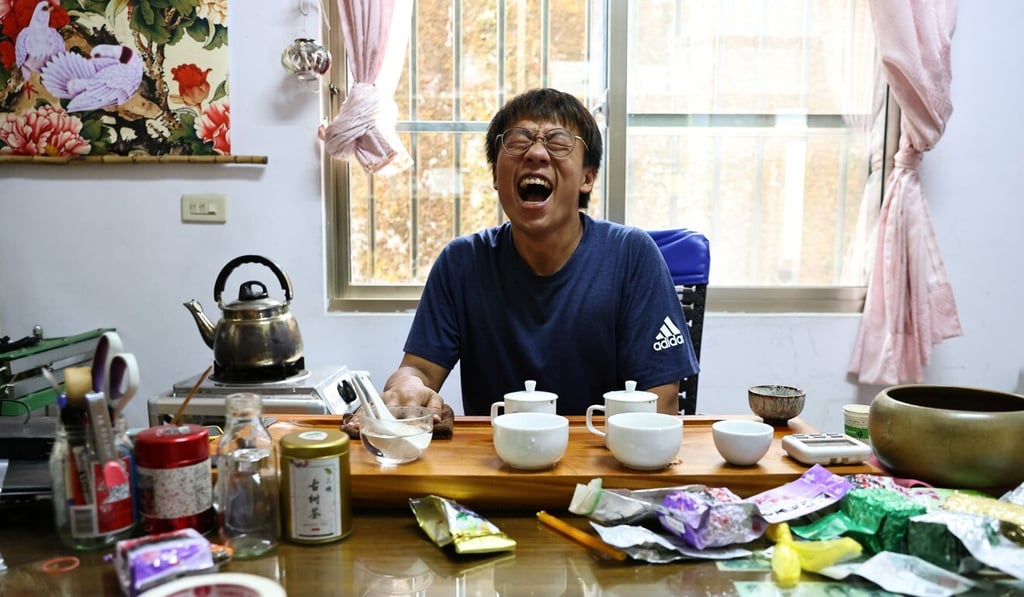
“Climate is the thing we can least control in managing our tea plantation,” said Chien Shun-yih as he looked out over his withering tea fields in the island’s picturesque southern Meishan township. “We really do rely on the sky to eat.”
Taiwan’s tea output does not come close to matching China or India’s, but what it lacks in quantity it makes up for in quality, especially the high mountain premium Oolong variety that Meishan specialises in.
Tea has been grown in the mountains around Meishan since the island was part of China’s Qing dynasty in the 19th century. The industry matured and expanded under Japanese imperial rule from 1895-1945.
Chien, 28, who returned to run the family plantation after his father died of cancer four years ago, is now working on coping strategies for extreme weather, including hacking deep into the undergrowth to look for pools to pipe water to the fields.
Lin Shiou-ruei, a government researcher helping Meishan’s farmers, said another problem the extreme weather brings is pests that attack the young tea buds.