Advertisement
US and Australia deepen defence ties, vowing to counter China’s ‘dangerous and coercive actions’
- Ministerial meetings involving Blinken, Austin and their opposite numbers lead to announcement of expanded military presence down under
- ‘We’re at a point now where we need to be building as much cooperation as possible’, says Australian defence chief, citing Taiwan tensions
5-MIN READ5-MIN
23

Mark Magnierin New York
The United States will expand the number of bomber task force and fighter aircraft forces in Australia, add a US army and navy presence, better integrate US-Australian weapons manufacturing capabilities and invite Japan to join “force posture” initiatives, top officials from the two countries said on Tuesday.
The officials taking part in Australia-US ministerial consultations in Washington said they shared the vision of an Indo-Pacific region where countries can enjoy security and prosperity, free from China’s heavy-handed economic and military tactics.
“Unfortunately, that vision is being challenged today,” said US Defence Secretary Lloyd Austin. “China’s dangerous and coercive actions throughout the Indo-Pacific, including around Taiwan, toward the Pacific Island countries and in the East China and South China seas threaten regional peace and stability.”
Advertisement
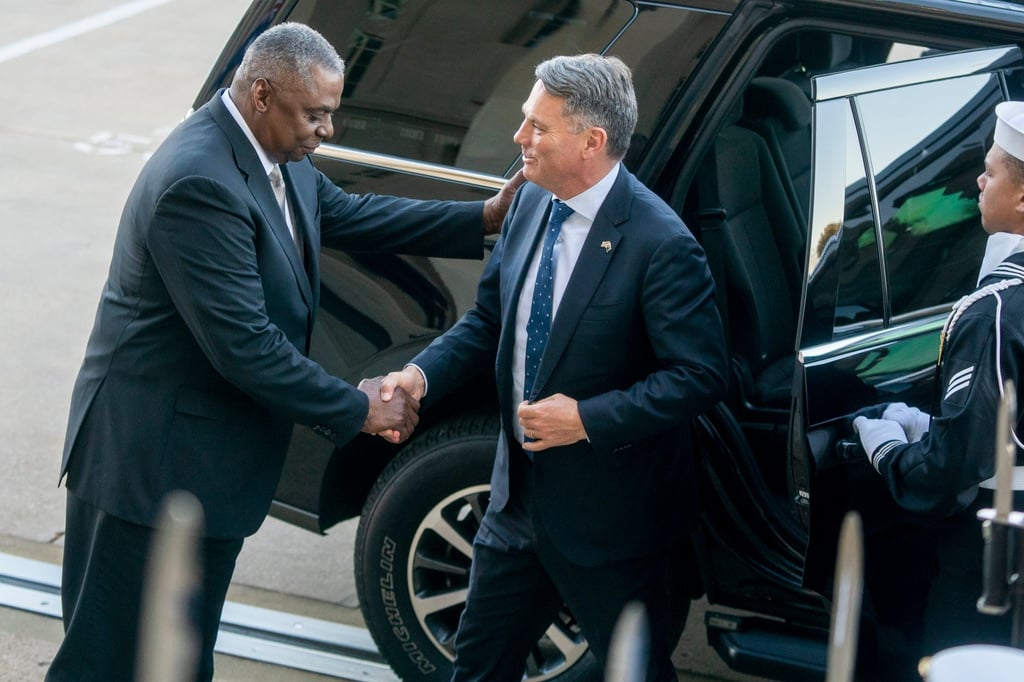
Austin attended the one-day meeting alongside US Secretary of State Antony Blinken, Australian Foreign Minister Penny Wong, and Australian Deputy Prime Minister and Defence Minister Richard Marles.
In the past, companies and research institutions at the cutting edge of defence technology have often viewed their work through a competitive, nationalistic lens.
Advertisement
But as threats to global peace and stability have intensified from Taiwan to Ukraine, it has become more crucial to integrate manufacturing and research on artificial intelligence and quantum computing, said Marles, evident in plans to closely bind Australian and American capabilities.
Advertisement
Select Voice
Select Speed
1.00x