Tested by North Korea’s missile launch, new US-Japan-South Korea alliance passes
- While cooperation could unwind, early signs of working together were seen after Pyongyang reportedly tested a rocket carrying a spy satellite
- Discussing the security pact reached at Camp David, officials from the three nations say they will build ‘stronger and deeper trilateral cooperation’

The trilateral South Korea-Japan-United States security pact got an early test last week, just hours before the summit announcement at Camp David, the US presidential retreat, when North Korea launched a ballistic missile, officials from the three allied countries confirmed on Tuesday.
In a historic step, and at the urging of US President Joe Biden, Tokyo and Seoul overcame decades of animosity, agreeing to work with the US on a series of defence measures: a more powerful early-warning missile detection system; annual comprehensive military exercises; a new three-way intelligence sharing pact and a “state of the art” hotline.
China, which has benefited from the long-standing distrust between the two neighbours, has expressed wariness over the deal.
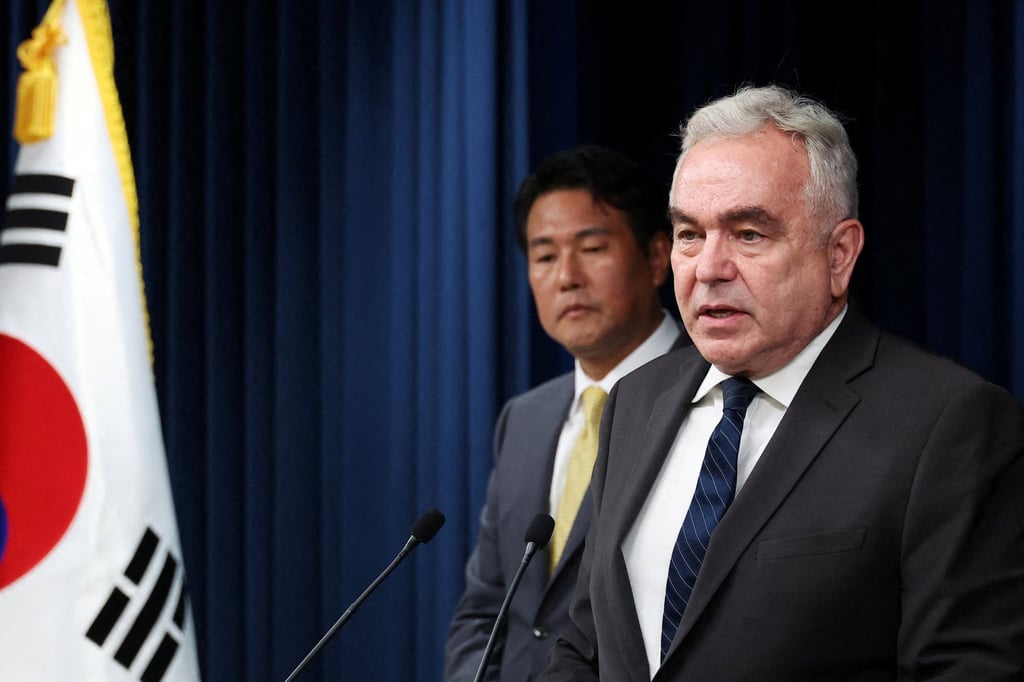
On Tuesday, US Indo-Pacific adviser Kurt Campbell said at the Centre for Strategic and International Studies (CSIS) that Japanese Prime Minister Fumio Kishida and South Korean President Yoon Suk-yeol had exhibited political bravery with the rapprochement.
While the risk remains that their cooperation could unwind, early signs of working together were seen shortly after Pyongyang reportedly launched a carrier rocket Chollima-1 carrying a spy satellite that crashed during its third stage. Although that launch failed, Pyongyang threatened to repeat its testing in October.