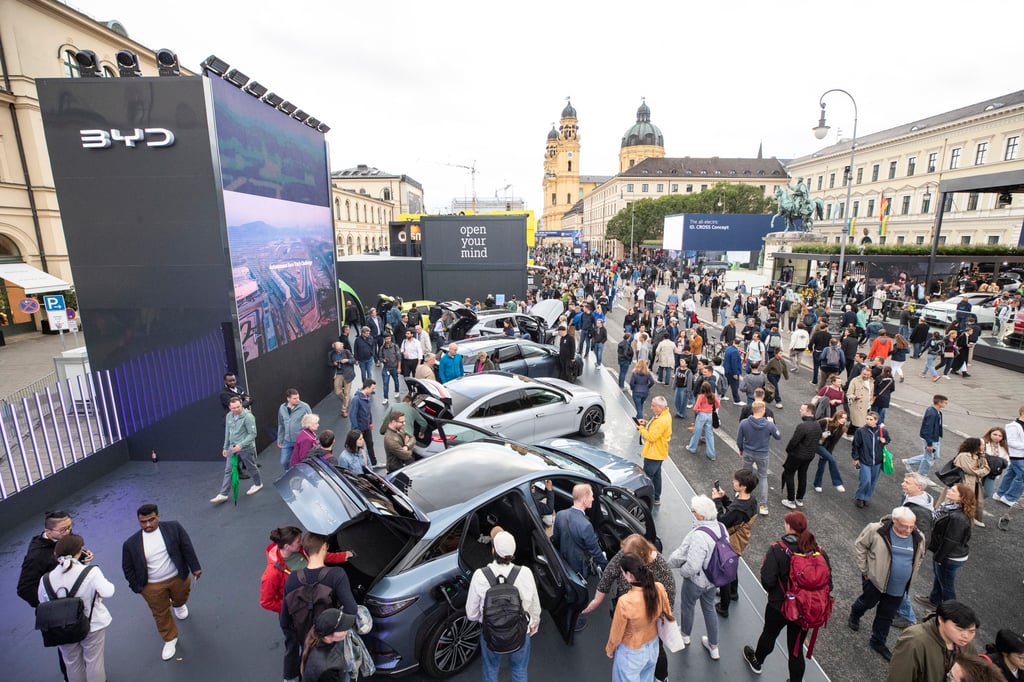
BYD’s win, Tesla’s defeat, Ford’s pivot: gap widens in US-China EV markets
From wavering policy to cost gaps, analysts say decades of state backing have given China a decisive edge over US rivals

After years of competing head-to-head with China in electric vehicles, the United States is now widely seen as falling behind – a reality increasingly acknowledged even within Detroit.
When asked about the topic recently on a podcast, US carmaker Ford’s own CEO said: “There’s no real competition from Tesla, GM or Ford with what we’ve seen from China. It is completely dominating the EV landscape globally and more outside China.”
For much of the past decade, the global electric vehicle market was defined by the rise of Tesla, which set the pace for innovation and sales as US carmakers appeared well positioned to lead the transition away from petrol engines.
Just a day before, BYD announced it had sold 2.26 million fully electric cars in 2025, posing the question: if the US was once a major competitor in the global EV market, how did it end up so far behind China?
According to analysts, inconsistent US federal policy has contributed to the growing gap in the EV industry, making it hard for the US to compete with China.