Is the EU trying to derail China’s European ambitions with its new connectivity plan for Asia?
Beijing has been making inroads into Europe with its ‘Belt and Road Initiative’ but Brussels is working on an alternative

Concerns have been growing in Brussels over the perceived lack of transparency surrounding Beijing’s plan – a pet project of Chinese President Xi Jinping – which some have argued it is using to expand its geopolitical influence in the region.
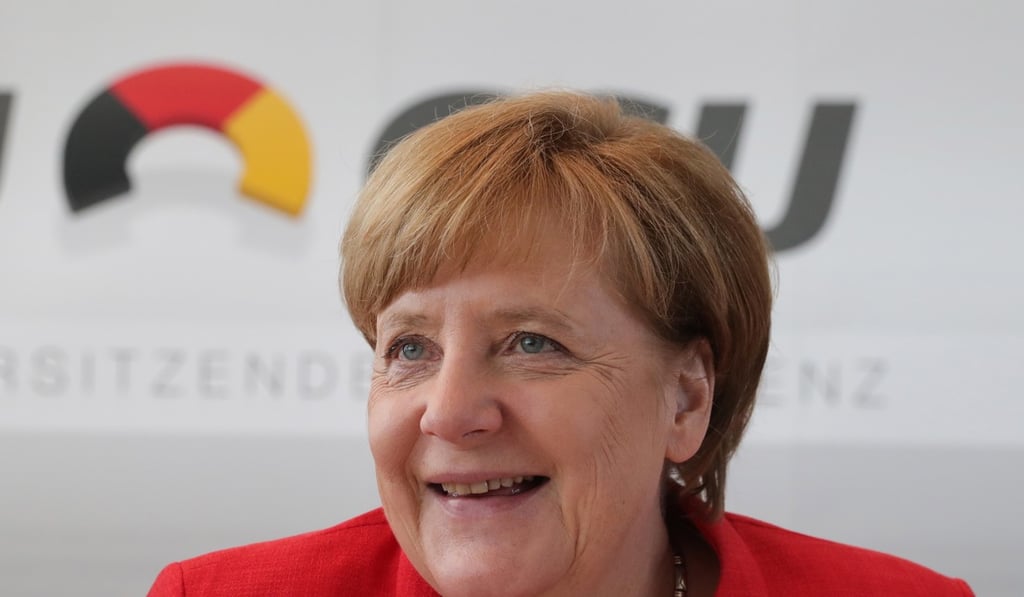
The issue is likely to be one of the key agenda items for German Chancellor Angela Merkel, who is expected to visit China later this month.
EU envoys hit out at China’s ‘unfair’ Belt and Road plans
The European Commission released a document in February soliciting opinion on the Europe-Asia Connectivity plan, which is expected to be adopted by the commission in July, and by the European Council in October. It will be presented at the 12th Asia-Europe (ASEM) Summit in Brussels later the same month.
The plan is seen as part of a shift within the EU on dealing with foreign policy issues, including China, with a more unified and firmer voice. Just last month, 27 of 28 EU ambassadors in Beijing – Hungary’s representative being the exception – reportedly signed a document denouncing the belt and road plan for hampering free trade and giving an unfair advantage to Chinese companies.
“Belt and Road Initiative” countries will benefit most in event of any China-US ‘trade war’
Frans-Paul van der Putten, a senior research fellow at the Netherlands Institute of International Relations, said the release of the EU’s plan was intended to make clear that the Chinese initiative was not the only option for inter-regional development.
“The EU is unhappy that many countries in Asia and eastern Europe seem to regard China as the main source of investment in greater regional integration, whereas in the view of the EU it is itself a much larger actor in this regard,” he said.
A source from the German foreign ministry said that “the ‘Belt and Road Initiative’ needs to be in line with international standards regarding the environment or labour [for example]”, adding that there were concerns over the lack of a fair and transparent process for public procurement.