
The lesson of the Pakistan suicide attack: China will have to pay a high price for its infrastructure plan
China’s greatest security problem in strife-torn Pakistan is that it is increasingly becoming the focus of separatists’ attention, Raffaello Pantucci writes

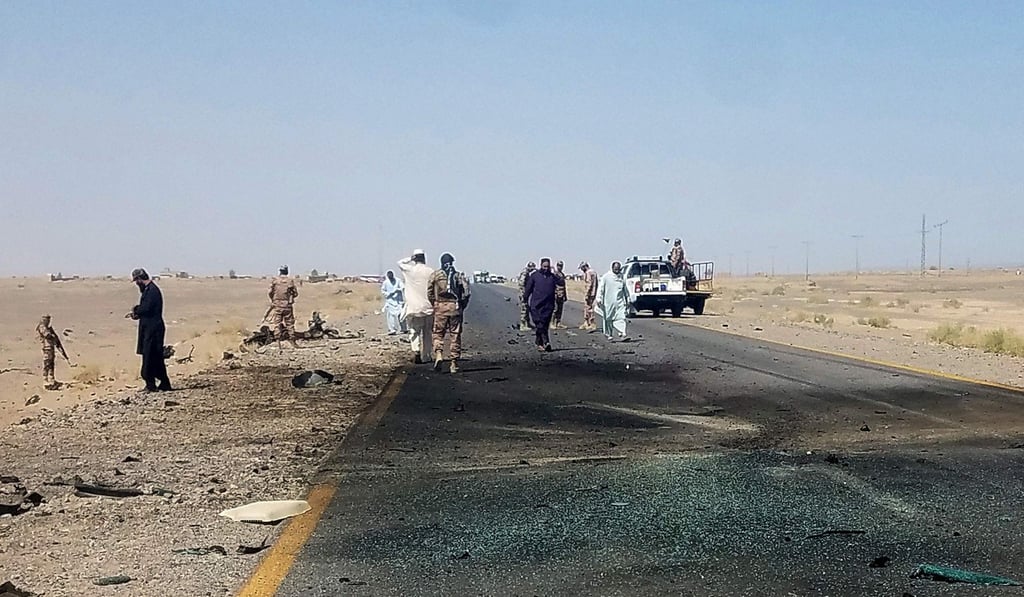
The attempted suicide bombing against a bus carrying Chinese engineers in Dalbandin, Balochistan highlights the complexity of the security problems China faces in Pakistan.
The attack was a rare suicide bombing for the Balochistan Liberation Army and was specifically targeting China. It showed how Beijing is finding itself dragged into a clash whose answer lies in the resolution of fundamental issues within Pakistan.
In February this year, The Financial Times ran a story which claimed that Chinese officials had been negotiating for years with Baluchi separatists.
At around the same time, the Chinese ambassador to Islamabad gave an interview to BBC Urdu in which he proclaimed that Baluchi separatists “were not real Pakistanis” and did not pose a threat to the China-Pakistan Economic Corridor (CPEC).
The negotiations story was denied by senior Baluchi leaders as well as the Chinese Ministry of Foreign Affairs. BLA leader Aslam Baloch, whose son blew himself up at Dalbandin, dismissed the talks, stating: “Our people are [disappearing] every day. They are being killed. Their houses are being looted and burned. In such a situation, any dialogue with China is impossible. We reject such a proposal.”