Angela Merkel’s exit may mean a policy shift for China in Europe
- Analysts say German chancellor’s departure will bring new uncertainties to an already inward-looking European Union
- Beijing may have to take a broader approach in the region as the political landscape changes

China will have to reconsider its approach to Europe when German Chancellor Angela Merkel makes her exit and the political landscape in the region changes, according to analysts.
They say Merkel’s departure will bring new uncertainties to an already inward-looking European Union and add to the complexity for Beijing as it tries to counter rising protectionism in the United States and the tide of anti-globalisation sentiment.
Cui Hongjian, a research fellow on European issues at the China Institute of International Studies, said Merkel’s departure would raise the question of whether China and Germany could continue their “pragmatic” approach to cooperation.
“China will be most concerned about whether the new leadership in Germany can maintain the policies of the Merkel era,” Cui said.
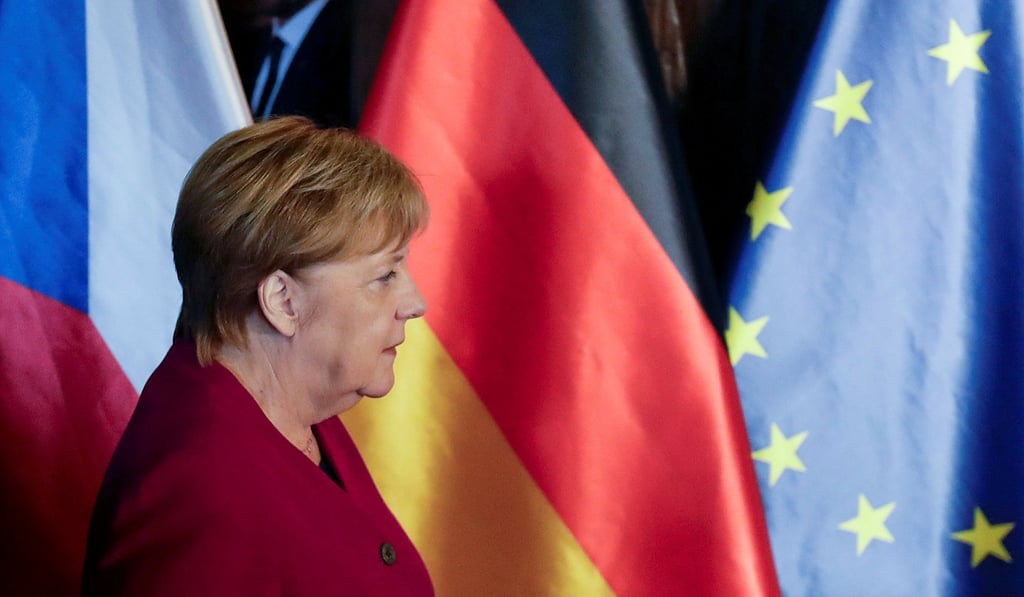
Since she took office in 2005, Merkel has visited China 11 times and there have been regular official meetings between the two sides trying to consolidate bilateral trade relations and cooperation on technology, despite their diverging views on human rights. Merkel has dominated European politics over the past 13 years and was an anchor for the EU during the global financial crisis and its sovereign debt crisis.
China has for years tried to foster close ties with Germany as a means to push forward its relations with the European Union. But its growing presence in central and eastern Europe via the “16+1” grouping led by Beijing has been met with wariness in Germany and drawn criticism from Brussels and EU nations, who say it is trying to win over peripheral member states to damage unity and influence European policies on China such as human rights and the South China Sea.