University of Michigan says it will cut ties with China’s Confucius Institute
- The American university says it wants to expand its own Chinese programmes

The University of Michigan said on Monday that it would end its contract with China’s controversial Confucius Institute next year.
It said that it had decided not to renew the agreement for a third term when the partnership expires in 2019 and that Hanban, the Confucius Institute’s Chinese headquarters, had been informed.
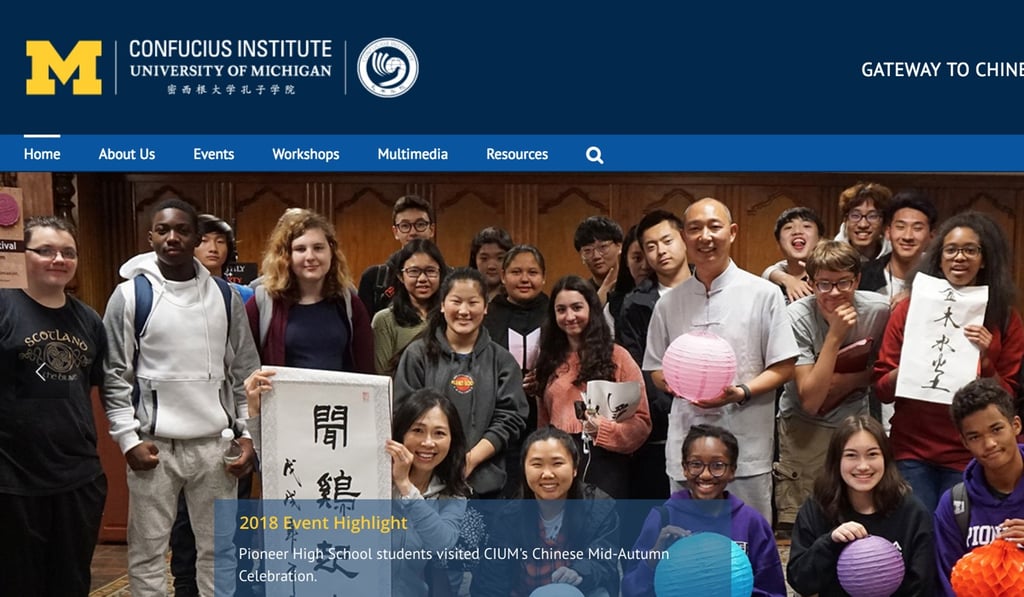
The Confucius Institute opened on the campus in Ann Arbor in 2009 – one of more than 500 that have sprung up worldwide since 2004 with a stated aim of promoting Chinese language and culture.
But the institutes, which are funded by Beijing and have links to the Ministry of Education, have come under increasing international scrutiny, accused of promoting China’s world view and trying to spread its political influence and Communist Party propaganda abroad.
These worries have prompted other universities in the United States – including the University of Chicago and Pennsylvania State University – to cut ties with the institute.
Concerns have been raised over its source of funding, teachers and the educational materials used, with the institute criticised for restricting academic freedom and delivering a selective, politicised view of China as a means to advance the country’s soft power.
Most Confucius Institute instructors are sent from mainland China on two-year assignments, their salaries paid by the Chinese government. The programme’s top leadership is dominated by Chinese government officials, including representatives from the propaganda department.