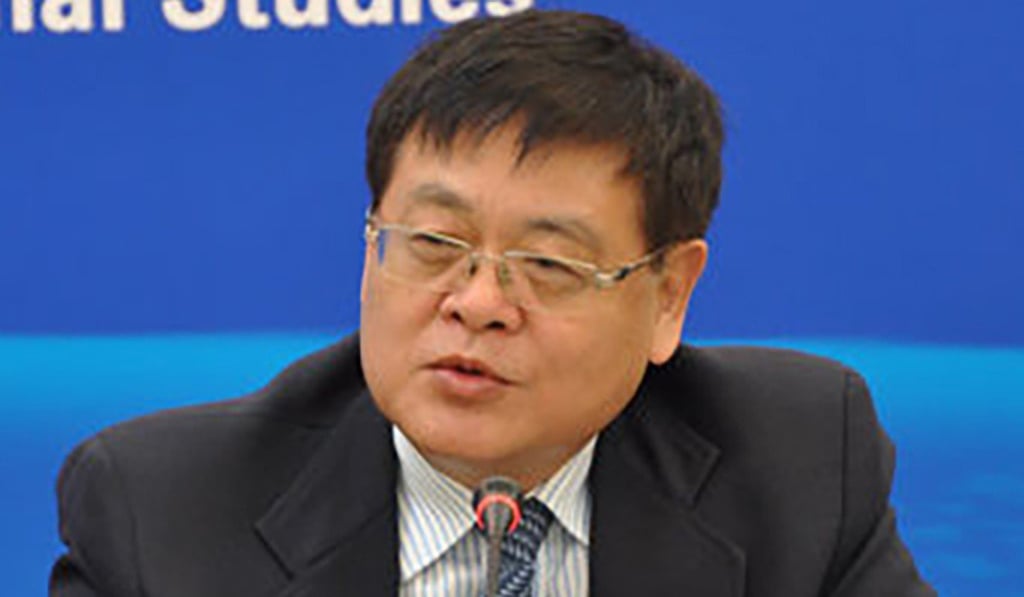
'Incompatible political values' at the core of tense Sino-US relations, expert Wang Jisi says
- International relations expert warns the two sides may drift further apart ‘and the danger of lasting, partial confrontation does exist’
- Remarks come ahead of 40th anniversary of diplomatic ties between the two former cold war adversaries

China and the United States risk drifting further apart towards “partial confrontation” in the coming years because of their competing ideologies and value systems, a Chinese international relations expert warns.
The remarks by Wang Jisi, president of the Institute of International and Strategic Studies at Peking University, came at a tense time in relations between Beijing and Washington, and on the eve of an important milestone.
Tuesday marks the 40th anniversary of the establishment of diplomatic ties between the two former cold war adversaries.
But neither side will be in the mood for celebration, with relations in what many believe is the worst downward spiral in decades – strained by a protracted trade war and growing rivalry over technology and security.
In an article just published in World Affairs, a journal controlled by the Chinese foreign ministry, Wang wrote that a clash of civilisations was at the heart of the bitter geostrategic competition between the world’s top two economies.
Compared to trade frictions and the shifting of the power balance in favour of China, he argued that incompatible political values had become the biggest contributing factor to the tough challenges facing Sino-US relations.
“Forty years ago, parallel security interests had overcome the barriers posed by vexing problems such as Taiwan and led to the normalisation of diplomatic ties and subsequently China’s reform and opening up had helped expand common economic interests immensely,” Wang wrote.
“However, without the support of shared value systems, such common interests could not be consolidated or enhanced, especially when people with divergent values have vastly different definitions of their national interests,” he said.