Italy’s move to join New Silk Road may see European Union tighten coordination on China
- EU wants member states to speak with one voice on China issues, analyst says
- Italy faces internal and external criticism for its decision to side with Beijing

Italy’s decision to join Beijing’s multibillion-dollar “Belt and Road Initiative” may prompt the European Union to tighten its coordination on China amid growing scrutiny of its efforts to expand its global clout, analysts say.
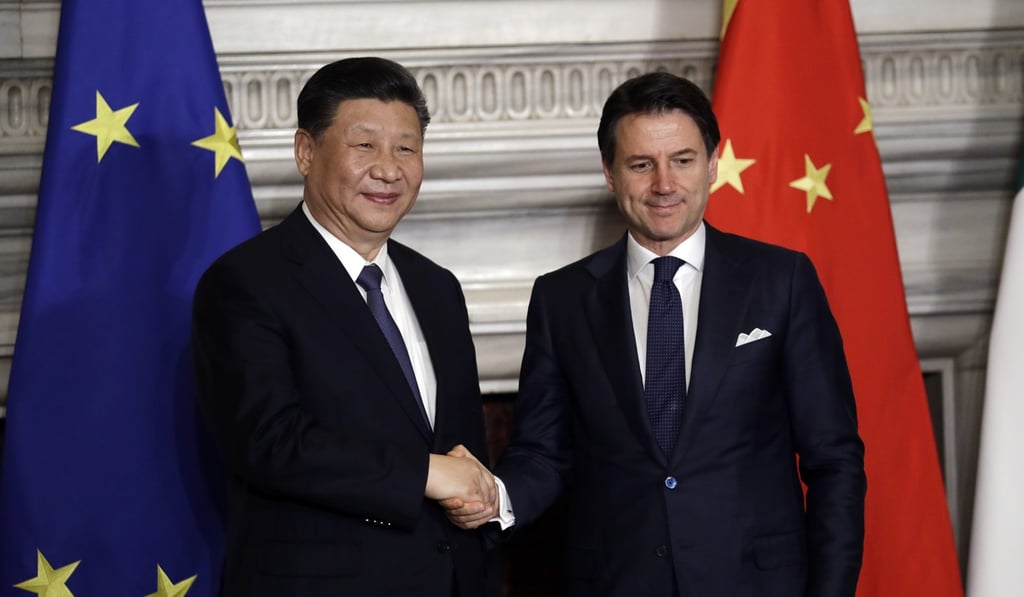
Among the 29 other agreements signed in Rome during a state visit by Chinese President Xi Jinping were two port management deals between the China Communications Construction engineering company and the ports of Trieste, situated in the northern Adriatic Sea, and Genoa, Italy’s biggest seaport.
The agreements also cover areas such as satellites, e-commerce, agriculture, beef and pork imports, media, culture, banking, natural gas and steel.
Italy’s decision to join the controversial belt and road programme has been heavily criticised at home and abroad. Critics said the move helped to legitimate China’s geopolitical ambitions, with the heavy borrowing for infrastructure spending creating a “debt trap” for participating nations.