South Korea’s US-China dilemma deepens with support for America’s Indo-Pacific strategy
- Seoul’s involvement in Indo-Pacific policy is expected to increase the US’ capacity for operations in the contentious South China Sea
- South Korea is caught in the quandary of trying to placate both its security ally, the US, and top trading partner, China

South Korea’s plan to take part in the United States’ Indo-Pacific strategy has deepened its dilemma as it tries to maintain a balance between its security ally, the US, and top trading partner, China, analysts said.
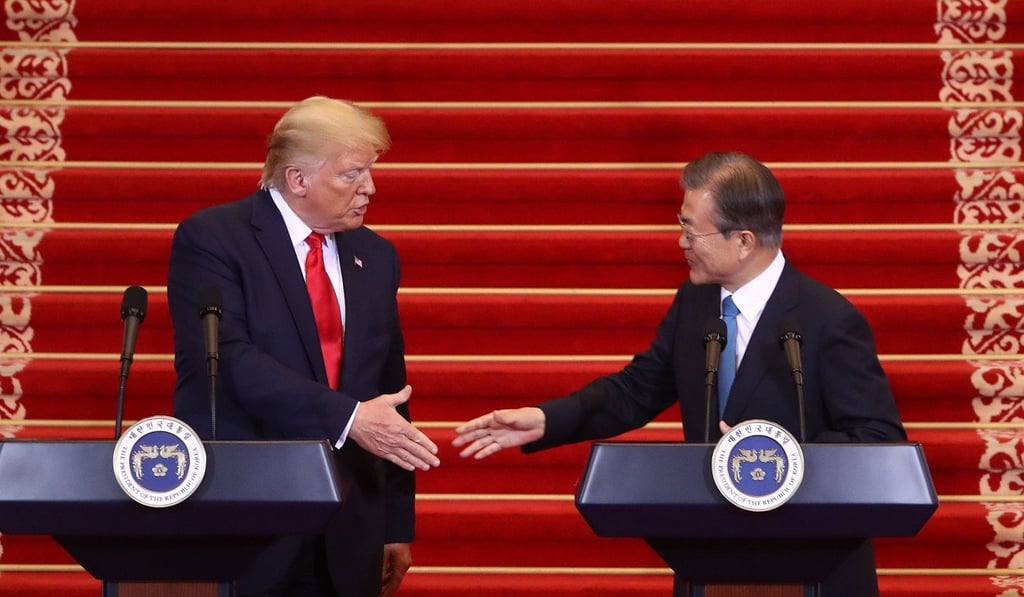
Moon’s remarks at the presidential Blue House – the first of their kind for the South Korean leader elected in 2017 – had special significance given that the Indo-Pacific strategy is seen in Beijing as an initiative to contain China.
Moon said that “under the regional cooperation principles of openness, inclusiveness and transparency, we have agreed to put forth harmonious cooperation between Korea’s new Southern policy and the United States’ Indo-Pacific strategy”.
Seoul’s “new Southern policy” was announced in 2017 after Beijing instituted unofficial sanctions on the nation – including a boycott of South Korean tourism – in response to Seoul’s decision to allow the US to deploy an anti-missile system in the country.
Beijing had protested the US’ move, saying it would allow the American government to look deep into the mainland and monitor China’s military facilities.