Joint US-Chinese operations against fentanyl led to trafficking gang’s downfall
- After nine people were sentenced in Hebei province, officials from both sides shed light on how they worked together to target the international supply chain
- Operation is first known success for cross-border crime-fighting initiative to tackle the drug at the centre of America’s opioid crisis

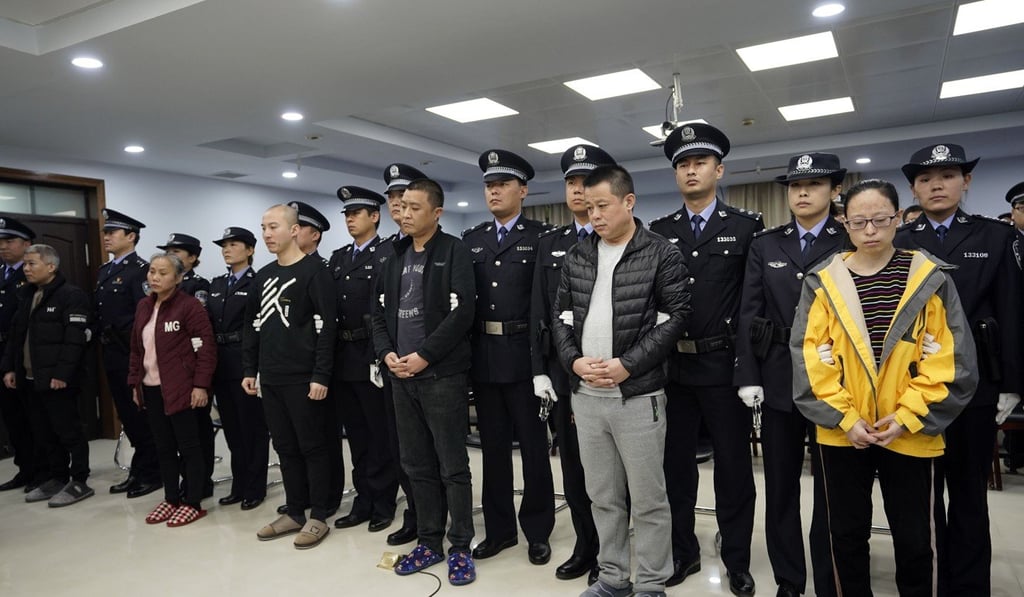
Thursday’s sentencing of a gang of drug traffickers in a smoggy city in northern China that few outsiders are likely to have ever heard of offers a rare insight into how the US authorities are working with their Chinese counterparts to tackle a deadly scourge that has devastated communities across the United States.
After the conclusion of the case – which saw one gang member given a suspended death sentence and eight others jailed, two of them for life – a group of Chinese and American law enforcement officers gathered in Xingtai, an industrial city in Hebei province, to share details of how their joint investigation had brought down an international fentanyl smuggling operation.

It was the first public example of how the two countries have been working together to target the trade. US authorities began passing information about suspected cases to China in 2012, and, following a rise in the number of overdoses linked to the synthetic opioid, American officials in 2014 established more regular communication about the drug with China, the biggest supplier of fentanyl and its related forms.
While issues such as soybeans, tariffs and 5G technology have dominated the US-China dialogue in recent years, the sale of Chinese-made fentanyl has also become a factor in the trade talks, with US President Donald Trump complaining that China is not doing enough to stop the drug from reaching America.
But this debate has taken places against a backdrop of overdose deaths, homelessness and devastated families and communities, spurring law enforcement to carry on their collaboration throughout the ebb and flow of tensions between the two countries.
“If there’s one area of cooperation globally that a lot of countries who don’t see eye-to-eye on many things, like trade, do see eye-to-eye on, it’s organised crime, criminality and trafficking,” said Jeremy Douglas, regional representative of the United Nations Office on Drugs and Crime for Southeast Asia and the Pacific.