Advertisement
China-Japan relations
ChinaDiplomacy

China likely to push Japan on regional trade pact when Xi Jinping and Shinzo Abe meet in Beijing

  • Japanese prime minister is expected to raise Hong Kong and North Korea as well as human rights, after professor was detained on suspicion of spying
  • But for Chinese leader, RCEP – and convincing Tokyo to stay in the deal – will be top of the agenda
3-MIN READ3-MIN
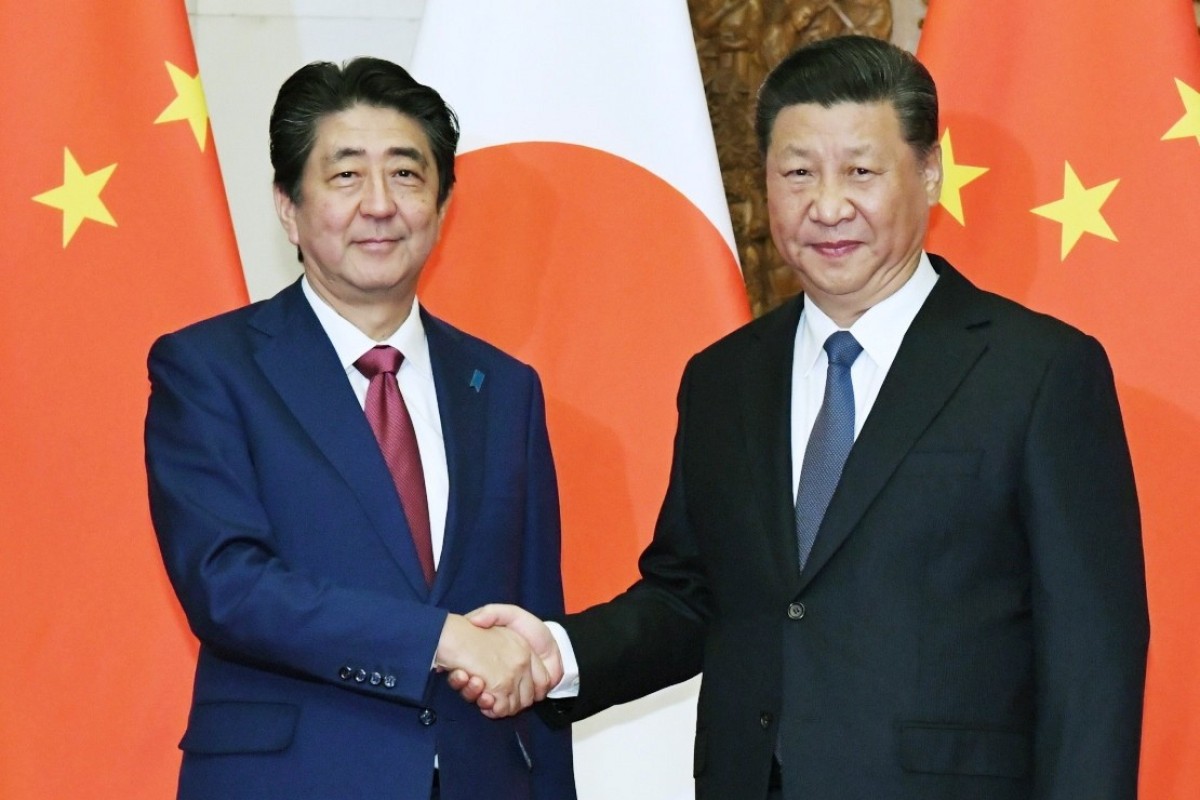
Shinzo Abe (left) meets Xi Jinping in Beijing last year. The two leaders will meet again in the Chinese capital on Monday. Photo: EPA-EFE
Laura Zhou

China is expected to press Japan to stay in a regional trade pact when President Xi Jinping meets Japanese Prime Minister Shinzo Abe in Beijing on Monday, according to observers.

It will be Abe’s second visit to the Chinese capital since bilateral ties between the two neighbours – strained over wartime history and territorial disputes in the East China Sea – began thawing last year, partly because of trade pressure directed at both countries from US President Donald Trump.

Beijing has said relations are now on the path “back to a normal track”, and Xi is expected to pay a state visit to Japan in spring – his first to the country since he took office in 2013. China and Japan also agreed last year to explore cooperation on infrastructure projects in third countries, though little progress has been made.

Advertisement
Hong Kong and North Korea are expected to be high on Abe’s agenda when he meets Xi, observers said. The Japanese leader is also likely to raise the issue of human rights after a Hokkaido University professor was taken into custody in September on spying allegations but released on bail last month.
Xi, meanwhile, is likely to push Japan to stay in the Regional Comprehensive Economic Partnership (RCEP), an Asian free-trade pact being negotiated among the 10 Association of Southeast Asian Nations member states as well as Australia, China, India, Japan, New Zealand and South Korea.
Advertisement

Talks for what could be the world’s largest trade deal began in 2012 and accelerated last year, mainly pushed by China and Japan, as Asia’s two largest economies face further potential economic pain and declining exports amid a trade war between Beijing and Washington.

Advertisement
Select Voice
Select Speed
1.00x