Advertisement

‘Debt-trap diplomacy’ a myth: no evidence China pushes poor nations to seize their assets, says academic

  • The ‘waiver of sovereign immunity’ clause causing fear and uproar in African nations is not well understood, says US professor
  • Analysts say there remain other concerning issues around China’s loans in Africa

Reading Time:5 minutes
Why you can trust SCMP
83
Mombasa Port in Kenya, where China helped with the country’s 19th berth expansion project. The China Africa Research Initiative reports no evidence China seizes assets if countries fail to pay loans. Photo: Xinhua

There is no evidence China aims to deliberately push poor countries into debt as a way of seizing their assets or gaining a greater say in their internal affairs, researchers and analysts said – countering Washington’s narrative that China was engaging in “debt-trap diplomacy”.

Deborah Brautigam, a professor of international political economy at Johns Hopkins University and founding director of the China Africa Research Initiative (Cari), considers the “debt-trap” narrative a myth.

Cari has scrutinised thousands of Chinese loan documents, mostly for projects in Africa, and reports that it has not found any evidence that China seizes the assets of other countries if they fail to pay loans.
The revelation comes at a time when dozens of African countries are either in or at a high risk of debt distress. Most of the countries – including Angola, Ethiopia, Kenya and Zambia, which are among the top borrowers from China – have sought debt relief. Beijing has since provided some debt relief to more than 20 countries and, for some countries, has cancelled interest-free loans that were maturing in 2020, according to the Chinese Ministry of Commerce.
Advertisement

But the debt-trap narrative became more pronounced in 2017 when reports circulated that China had seized the Sri Lankan port of Hambantota when the South Asian country fell behind in servicing its debts. However, Cari researchers say that instead of the port being seized by China, Sri Lanka privatised 70 per cent of the Chinese-financed port to a Chinese firm.
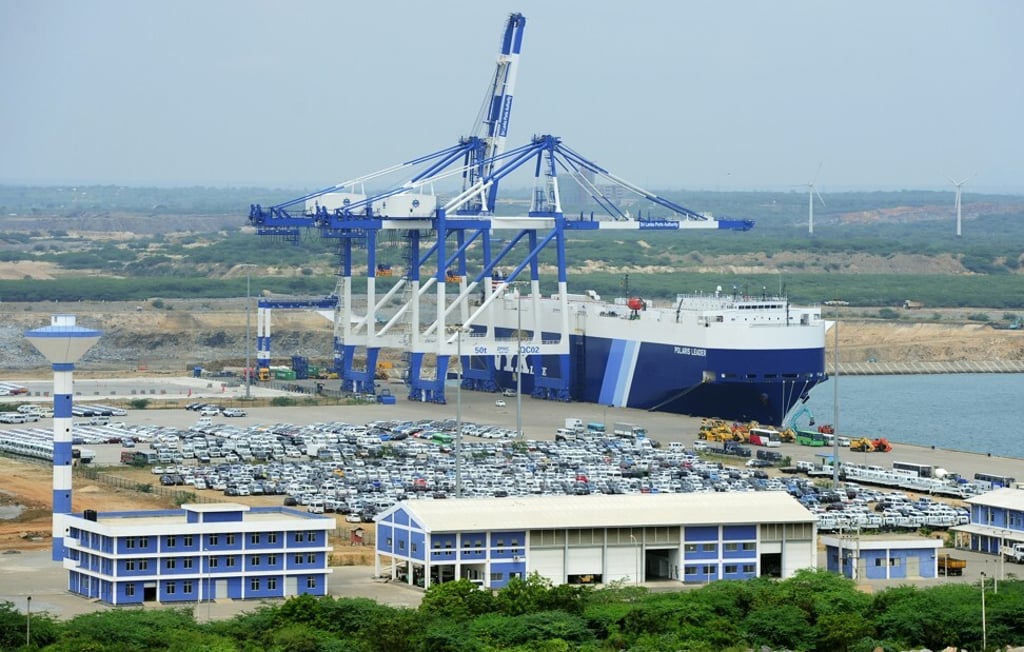
Colombo had secured two loans from China – US$307 million for the first phase of the port project and a further US$757 million – both from China Exim Bank – to build the Hambantota port. When it faced a cash crunch, Sri Lanka decided to lease the underperforming Hambantota Port to more experienced operators – and chose China Merchants for the job. This made the Chinese company the majority shareholder in a 99-year lease that helped Colombo raise US$1.2 billion.
Advertisement
The port at Hambantota, Sri Lanka, in 2015. Photo: AFP
Advertisement
Select Voice
Choose your listening speed
Get through articles 2x faster
1.25x
250 WPM
Slow
Average
Fast
1.25x