Joe Biden’s pick for trade representative embraces ‘sound formula’ of Trans-Pacific Partnership
- At her confirmation hearing, Katherine Tai says making trade pacts ‘with the challenge of China in mind’ remains ‘solid’ but does not endorse re-entering TPP
- She also calls it ‘critically important’ to ‘have a strategic and coherent plan for holding China accountable to its promises’

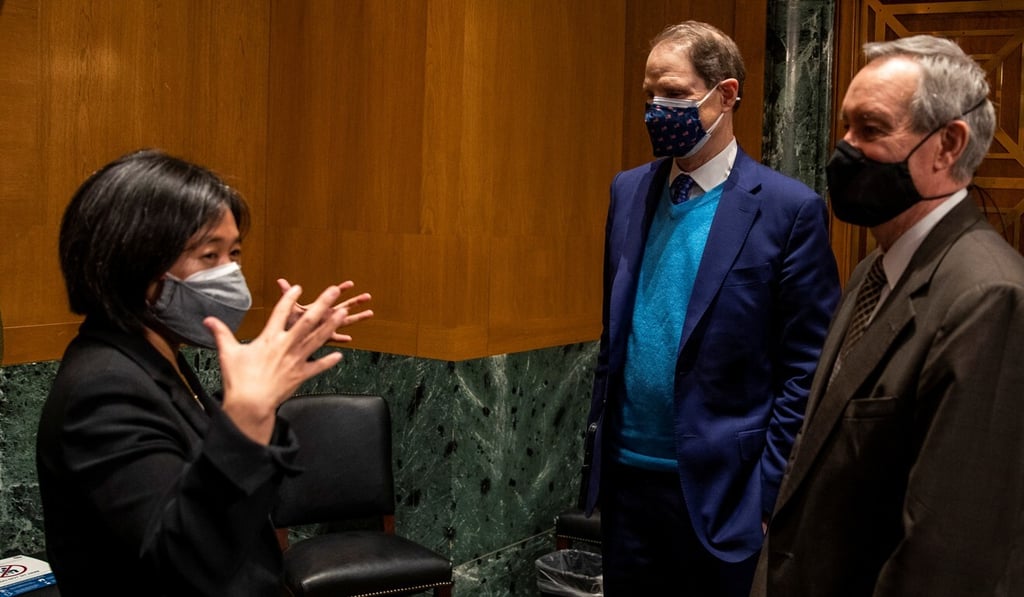
President Joe Biden’s nominee to lead US trade policy told senators on Thursday that the principles behind the Trans-Pacific Partnership (TPP) – the multilateral Pacific trade deal pursued by the Obama administration then rejected by former president Donald Trump – were a “solid equation” for countering China’s growing clout, but stopped short of endorsing a re-entry into the deal.
“The basic formula of TPP, which was to work with our partners, with whom we have very important shared interests economically and strategically, and with the challenge of China in mind, is still a sound formula,” said Katherine Tai, the nominee for United States Trade Representative (USTR), during her confirmation hearing before the Senate Finance Committee.
But she added: “A lot has changed in the world in the past five or six years. And a lot has changed in terms of our own wariness about some of the pitfalls of the trade policies we’ve pursued.”
The trade accord was revised by the remaining 11 signatories – including Japan, Canada and Mexico – after Trump pulled the US out, and came into effect as the Comprehensive and Progressive Agreement for Trans-Pacific Partnership in 2018.
Tai’s comments on the TPP were the latest sign of the new administration’s mindset as it begins to deal with the contentious issue of US-China trade, and another example of Biden’s sense of urgency that the US must partner closely with its allies as it grapples with Beijing.
They also reflect the thorny domestic politics of trade deals in the US, as officials seek to balance national security concerns with President Biden’s stance that any trade policy should be “worker-centred”.
In her opening statement, Tai made a point of underscoring the US-China trade rivalry: “I know first-hand how critically important it is that we have a strategic and coherent plan for holding China accountable to its promises and effectively competing with its model of state-directed economics,” she said.