ExplainerWhy is Japan going to dump radioactive water from Fukushima nuclear plant in the sea? What are the risks and is there an alternative?
- Decision to release waste water from the nuclear plant hit by a devastating earthquake and tsunami in 2011 has triggered a backlash from neighbouring countries
- Many scientists believe it is the only realistic option, but governments, fishing groups and environmentalists have also expressed concern

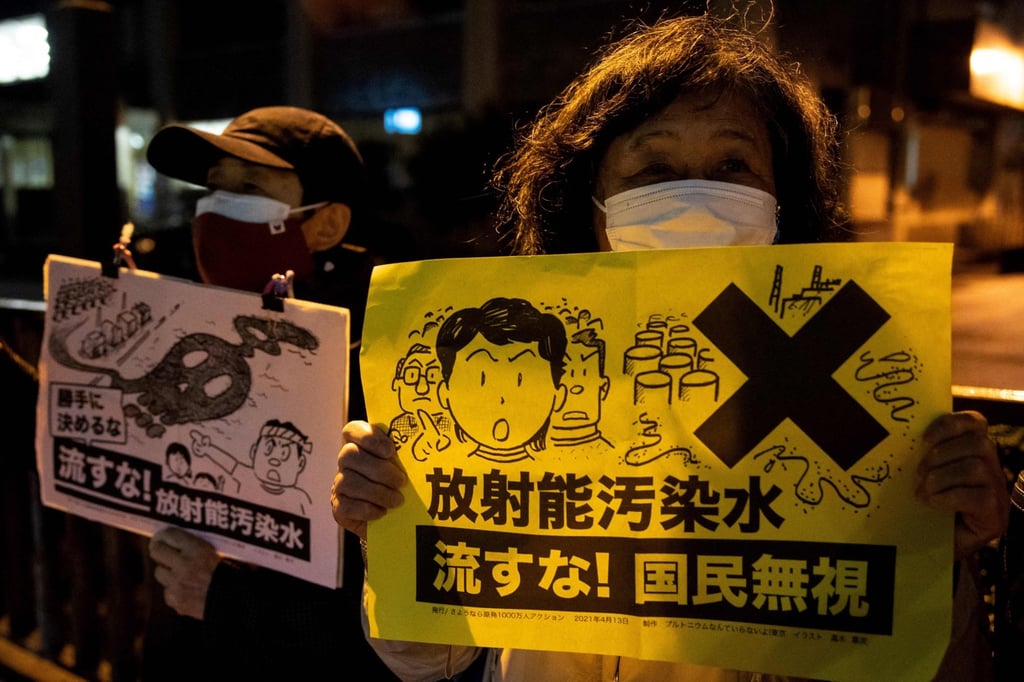
Japan’s decision on Tuesday to release treated radioactive water from the damaged Fukushima nuclear plant into the sea was met with fierce opposition from its neighbours, including China, as well as the local fishing industry.
Prime Minister Yoshihide Suga said ocean release was the most realistic option for Fukushima’s recovery, a decade after a massive earthquake and tsunami triggered a nuclear meltdown in March 2011.
Here we examine some of the biggest questions raised by the decision.
What exactly does the waste water contain?
Following the 9.0-magnitude earthquake on March 11 2011, three out of the six reactors at the Fukushima Daiichi Nuclear Power Plant overheated. The damage to the reactors meant that the water used to cool them down became contaminated.
Although most of the radioactive elements can be filtered out by a system known as the ALPS (Advanced Liquid Processing System), tritium, a mildly radioactive form of hydrogen, cannot be removed.
Nigel Marks, an associate professor of physics and astronomy at Curtin University in Perth, said: “It takes around 60-100 years to completely convert into harmless helium. In the spectrum of radioactive elements, tritium is at the mild end.”
But some other radioactive substances might still be present in the waste water. “There is a long list of other radioactive substances that could be present like caesium-137 and strontium-90. They may be present at high levels,” said Luk Bing-lam, chairman of The Hong Kong Nuclear Society.