China and Russia ready to shoot for the moon with ambitious research station plans
- The two space agencies have invited other countries to join the programme with exploratory missions expected this year
- First structures on the moon’s surface will provide a base for resource extraction, research and further exploration in space

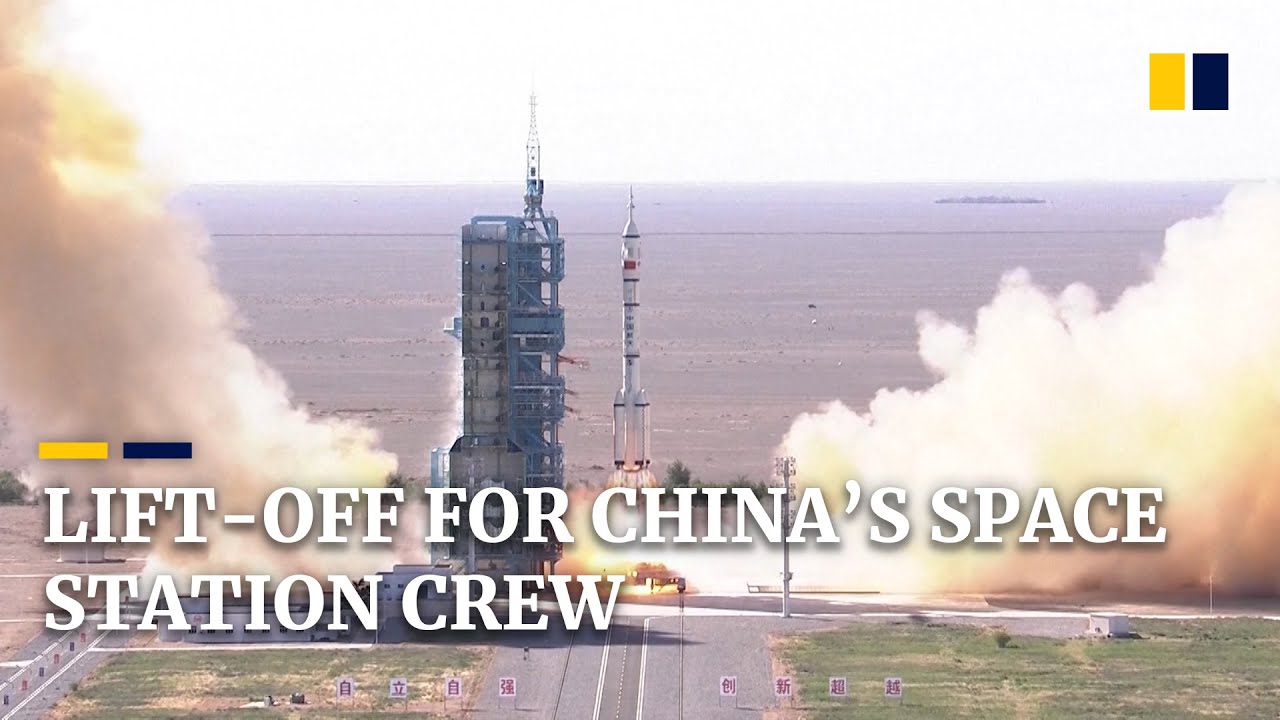
01:20
China successfully launches Shenzhou-12 manned space station mission
The plan is to develop comprehensive facilities at one or more locations on the moon’s surface and in its orbit, according to a road map and guidelines for potential partners released on Wednesday.
The stations will first operate autonomously and eventually serve as bases for future crewed missions and exploration for lunar resources. Preliminary exploratory missions are expected to begin this year, with construction beginning as early as 2025.
“China and Russia welcome international partners to participate in the ILRS programme at all stages and all levels of each stage,” Wu Yanhua, CNSA deputy director, told a joint online press conference with his Roscosmos counterpart Sergey Saveliev.
Neither China nor Russia has signed the US-led Artemis Accords, established in October last year to set rules of behaviour on the moon – allowing countries or companies to create “safety zones” while extracting resources – in recognition that all parties will be intent on going to the lunar south pole, where water in the form of ice is known to exist.
On Tuesday, Brazil became the latest country to sign the accords, joining Britain, Australia, Canada, Japan, Luxembourg, the United Arab Emirates and Italy.