Advertisement
China’s ‘demands’ on Taiwan, regional issues seek to constrain US action
- Washington’s pressure on Beijing is not expected to let up as US President Joe Biden works jointly with Indo-Pacific partners
- China tells the US that its red lines include Hong Kong, Xinjiang and Taiwan
3-MIN READ3-MIN
94

Beijing’s hardline stance during senior-level talks with the US may seek to set constraints on American actions in the region, analysts say, but will not change how other countries are working with Washington or pushing back on sensitive issues such as Taiwan.
In a meeting with US deputy secretary of state Wendy Sherman in Tianjin on Monday, Chinese foreign minister Wang Yi laid out “basic demands” for the US not to challenge the Chinese system, not to disrupt China’s developmental practices and not to infringe upon issues it considers a matter of sovereignty including on Hong Kong, Xinjiang and Taiwan.
Chinese vice-minister of foreign affairs Xie Feng also unveiled two lists with demands for the US, including that it drop its extradition request for Chinese tech executive Meng Wanzhou and lift visa restrictions for Communist Party members and their families.
Advertisement
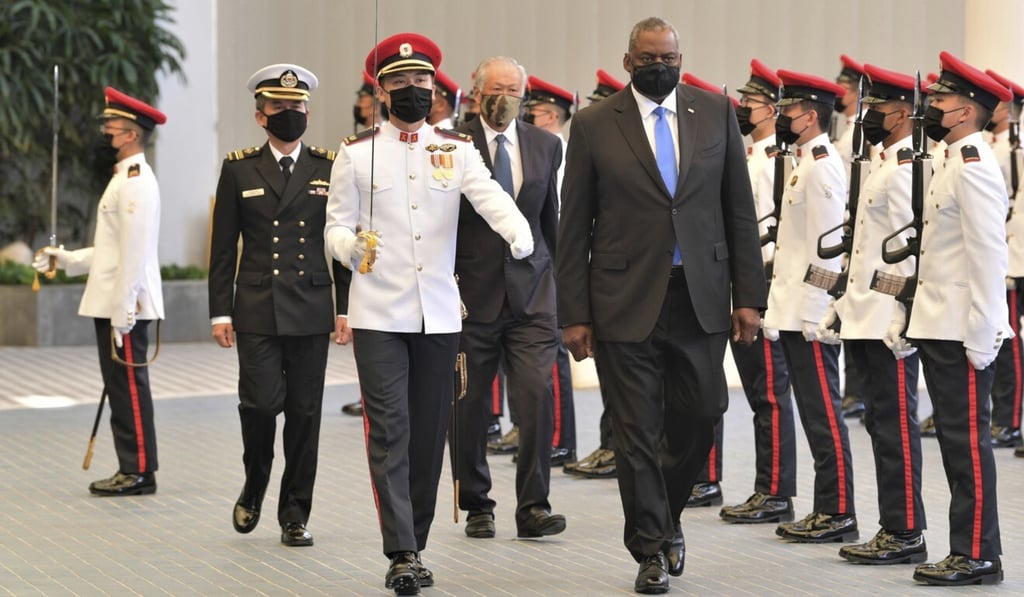
Analysts say Beijing is digging in its heels with the explicit list of demands, but that pressure from the US will not subside as President Joe Biden’s administration works more closely with regional allies on issues involving China. Sherman’s trip to Tianjin – after her tour through Japan, South Korea and Mongolia – has been followed by US Secretary of State Antony Blinken’s visit to India and US Secretary of Defence Lloyd Austin’s travel to Singapore, Vietnam and the Philippines to shore up US ties in Southeast Asia.
Advertisement
John Lee, a senior fellow at the Hudson Institute and a former national security adviser to the Australian government, said China’s “red lines” reflected an attempt by Beijing to take the initiative in “setting the agenda, expectations and limits on US actions in the region”.
Advertisement
Select Voice
Select Speed
1.00x