ExplainerHuawei extradition battle: The Trump card, the wild card, and Meng Wanzhou’s narrow flight path to freedom
- The final scheduled phase of the tech executive’s epic extradition case is about to begin in Canada, carrying the prospect of her release – or a US trial
- But nothing has been simple about the case, and a tantalising possibility hangs over its closing stages: could a deal be struck outside the court?

On May 27, 2020, a Boeing 777 sat on the tarmac of Vancouver International Airport, ready to take off on a non-stop flight to China.
The jet had been chartered but was so large it could not use the south side of the terminal that is reserved for private flights. Instead, it sat on the reinforced concrete of the north side, alongside commercial airliners.
It was capable of seating 361 passengers, but had been hired by Huawei Technologies (with the help of Chinese diplomats) with only one person in mind: the tech firm’s chief financial officer, Meng Wanzhou, who hoped that day to win her court battle to avoid extradition to the US and be released.
It was not to be.
In a key ruling, Associate Chief Justice Heather Holmes of the Supreme Court of British Columbia threw out Meng’s argument that the US fraud case against her failed the extradition requirement of double criminality – that a suspect must be charged with something that would amount to an offence had it been committed in Canada.
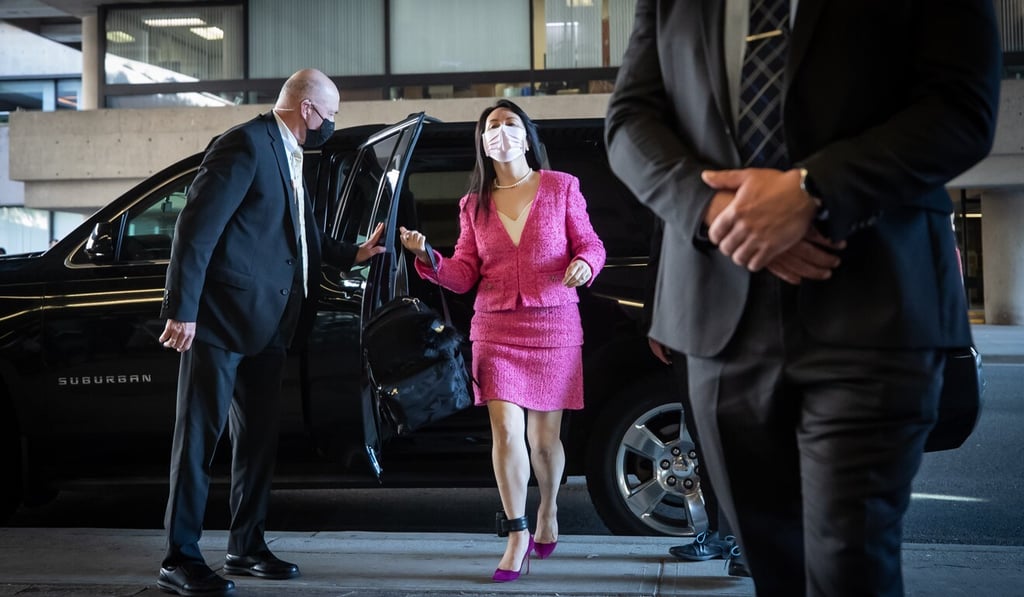
It was a heavy blow for Meng, whose extensive getaway plan – described by the head of her security detail in a bail hearing in January – was scrapped. Instead of triumphantly winging her way to Beijing, she returned to her C$13.7million (US$10.9 million) Vancouver mansion, where she remains under partial house arrest.