Business ties will keep the US-China relationship intact, long-time diplomat says
- Despite hard-line actions taken by both sides, Nicholas Platt says, ‘the idea of decoupling is ridiculous and undoable’
- Comments to the China Institute come as spate of proposed or enacted US and Chinese laws and executive actions challenge business between the two countries

Nicholas Platt, the long-time US diplomat who helped engineer the restoration of American ties with Beijing, said on Thursday that economic ties would keep the relationship intact despite hard-line policies enacted under Chinese President Xi Jinping.
Platt, who accompanied Richard Nixon on the 1972 presidential trip that led to Washington’s official diplomatic recognition of China and then set up the first US diplomatic outpost there since 1949, said that the people and organisations driving commerce will prevail over political ideology.
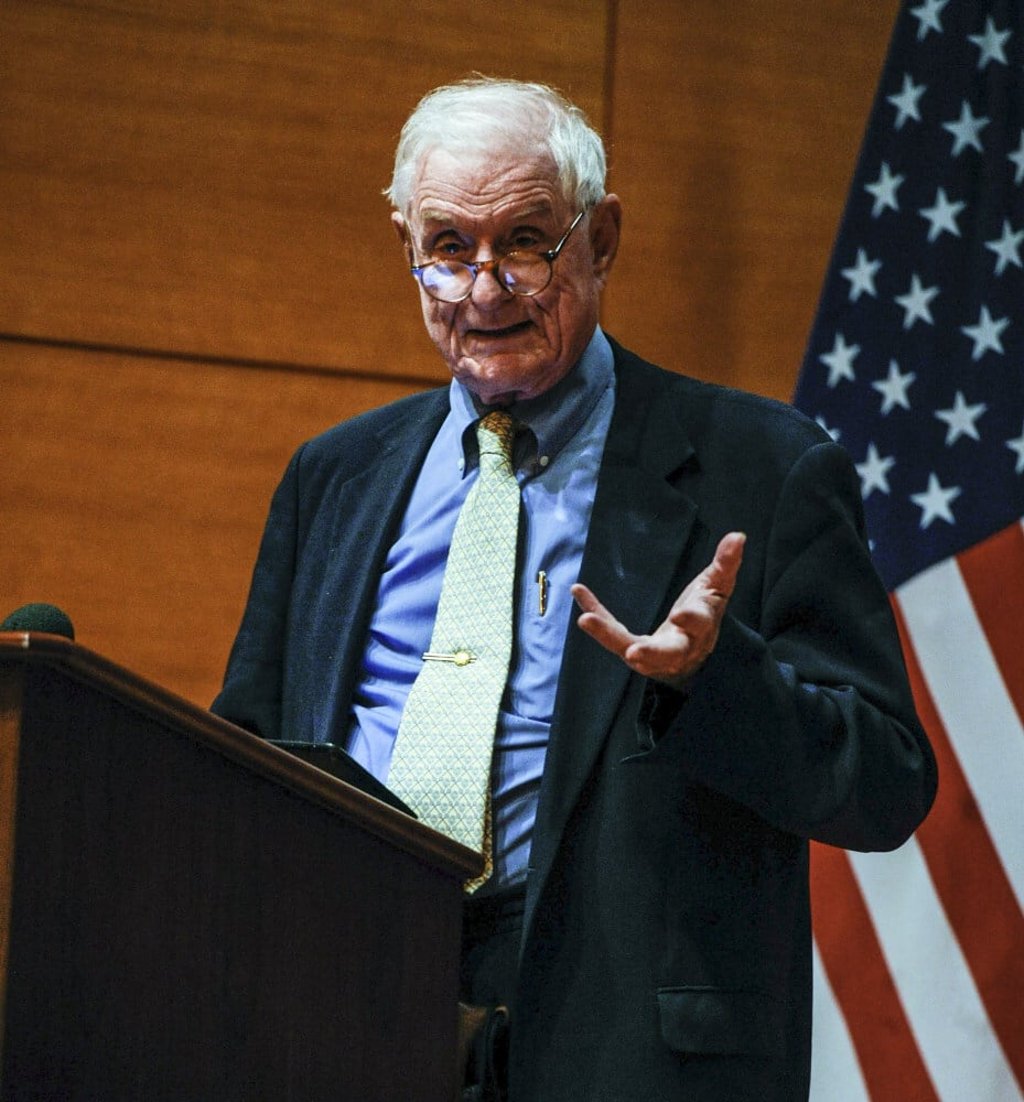
“Mister Xi has ramped up the rhetoric and made us all quite uncomfortable, but the people who have a legitimate reason, operational reasons, can be in touch with their Chinese counterparts [and] are simply doing it,” Platt, the president emeritus of the Asia Society, said in a discussion organised by the New York-based China Institute.
“Can you imagine Chinese and Americans not talking to each other today about – you know – the supply chain and about the shortages and so on and so forth?” he asked. “The idea of decoupling is ridiculous and undoable.”
Platt’s remarks came amid a wave of new proposed or enacted US and Chinese laws and executive actions that make business as usual between the two countries more difficult.