US expects to learn ‘valuable’ information about China’s surveillance balloons, White House says
- Waiting to shoot it down allowed for ‘a better understanding to study the capabilities of this balloon’, National Security Council spokesman John Kirby says
- Beijing maintains that the unmanned airship was for civilian research and has said the same about another Chinese balloon traversing South America

Analysis of the Chinese balloon shot down on Saturday will yield “valuable” information, a White House spokesman said on Monday, also confirming that the US had been investigating previous incursions by Chinese aircraft into US airspace before last week’s incident.
“We came into office aware that the Chinese were continuing this programme of spy balloons and that they were continuing to try to improve … this military capability,” National Security Council spokesman John Kirby said, referring to the administration of US President Joe Biden, who took office in 2021.
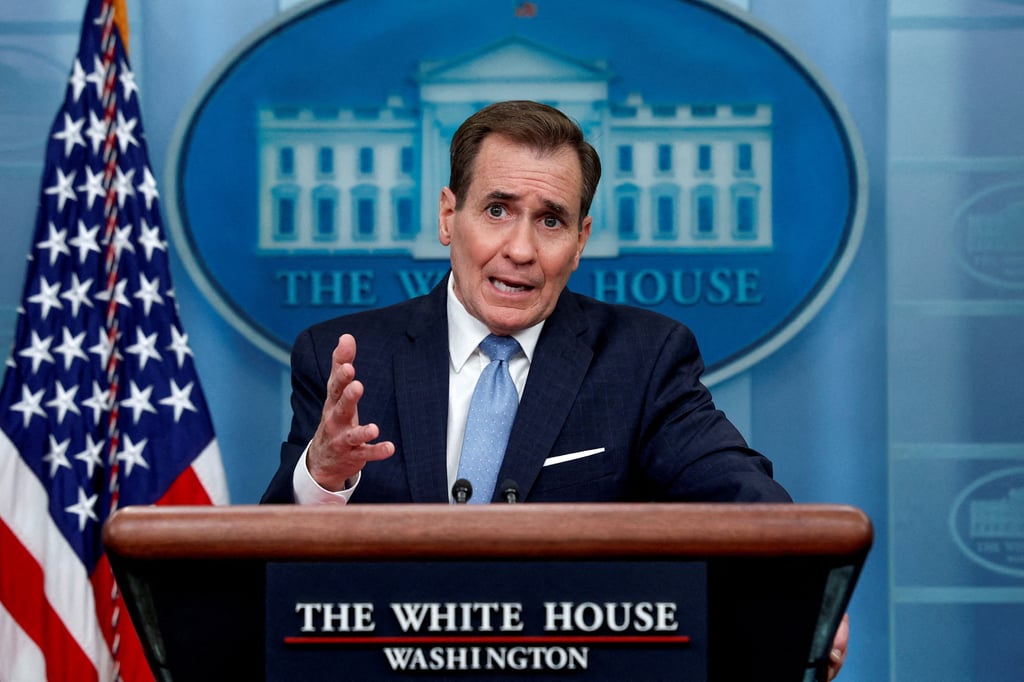
“We became aware that at least on three occasions surveillance balloons via the PRC, transited US airspace,” he said. “From every indication that we have, that was for brief periods of time, nothing at all like what we saw last week in terms of duration.”
In a recovery operation that began Monday morning, US Navy ships are using sonar to help map the downed balloon’s debris field, an area of about 1.5km by 1.5km (1 mile by 1 mile), according to General Glen VanHerck, commander of Norad, the joint US-Canadian air defence operation, and the US Northern Command.
They have also blocked off an area of 26 square kilometres (10 square miles) on the assumption that the debris might contain explosives. The Air Force aimed to bring the balloon down six miles off the coast based on Nasa’s advice that the debris field might stretch that far, VanHerck said.
He added that military officials “did not associate the potential of having explosives” with the possibility that the balloon carried weapons it could drop on US targets.