Advertisement

As I see itFor China and the US, is ‘no catastrophe’ really the best scenario?
- Both powers are again flexing their military muscle over Taiwan after the island’s leader met the US House speaker in California
- Without guardrail-building dialogue, Harvard professor Graham Allison warns ‘the chances of catastrophic miscalculations are rising’
3-MIN READ3-MIN
3

US-China ties have clearly entered a more dangerous and confrontational era as both powers again flex their military muscle over Taiwan.
Furious over Taiwanese President Tsai Ing-wen’s meeting with US House Speaker Kevin McCarthy in California last week, Beijing responded with three days of air and naval drills – including a simulated blockade of the self-ruled island.
Some saw it as a more restrained reaction than the last time, when the People’s Liberation Army held its biggest cross-strait exercises in decades after McCarthy’s predecessor Nancy Pelosi went to Taipei in August. Still, a pattern has emerged.

03:10
US House Speaker Kevin McCarthy meets Taiwanese President Tsai Ing-wen, despite Beijing’s warnings
US House Speaker Kevin McCarthy meets Taiwanese President Tsai Ing-wen, despite Beijing’s warnings
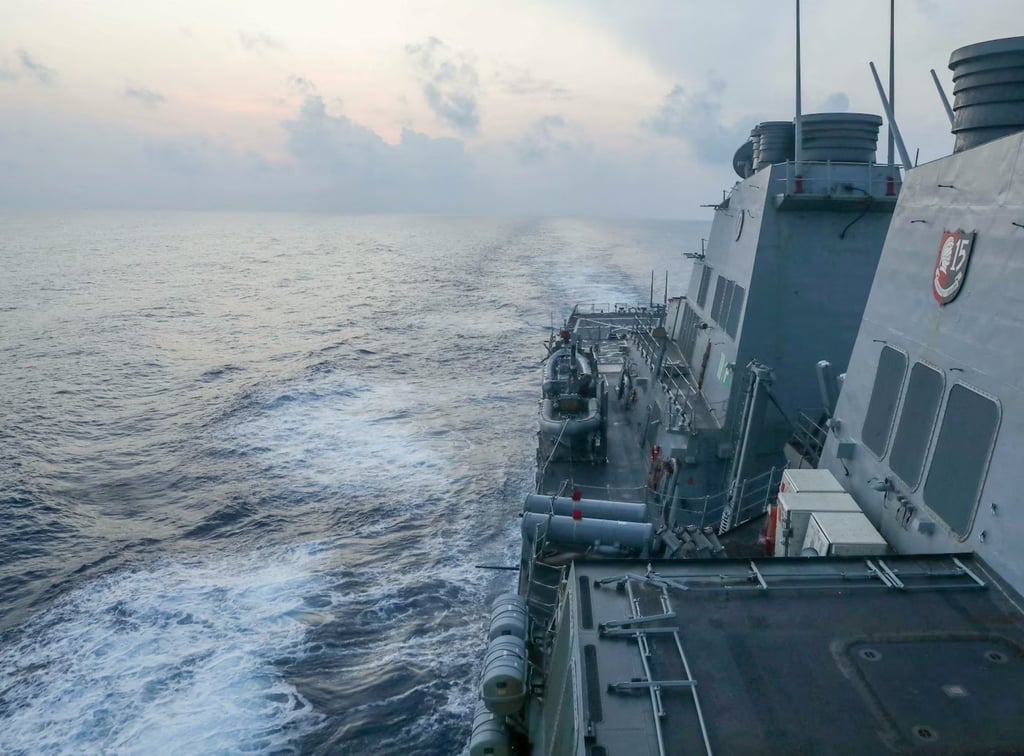
The US Navy responded to the PLA drills by sending the guided-missile destroyer USS Milius to the disputed Mischief Reef in the South China Sea on Monday, part of its freedom of navigation operations to challenge Beijing’s expansive territorial claims.
Advertisement
Washington and Manila also kicked off their largest, week-long combat drills in over 30 years on Tuesday. More than 17,600 military personnel are involved in the annual Balikatan exercise that will also involve Australia for the first time.
Beijing has been critical of Philippine President Ferdinand Marcos Jnr’s tilt towards Washington, especially his decision to give the US greater access to the country’s military bases, but Manila said its moves were “a form of deterrence” that was not aimed at any country.
Advertisement
Meanwhile, the US and Indian air forces conducted the Cope India exercise this week in West Bengal, with Japan as an observer. Last month, the US and South Korea also held their biggest joint field exercises in five years and the two countries plan to conduct their largest-ever live-fire drills in June.
Advertisement
Select Voice
Select Speed
1.00x