Advertisement
‘A game of whack-a-mole’: how could the scam industry bring China and the US together?
Cambodia has vowed to stamp out the scam compounds on its soil by month’s end – but perpetrators remain drawn to the potential for huge profits
7-MIN READ7-MIN
Listen

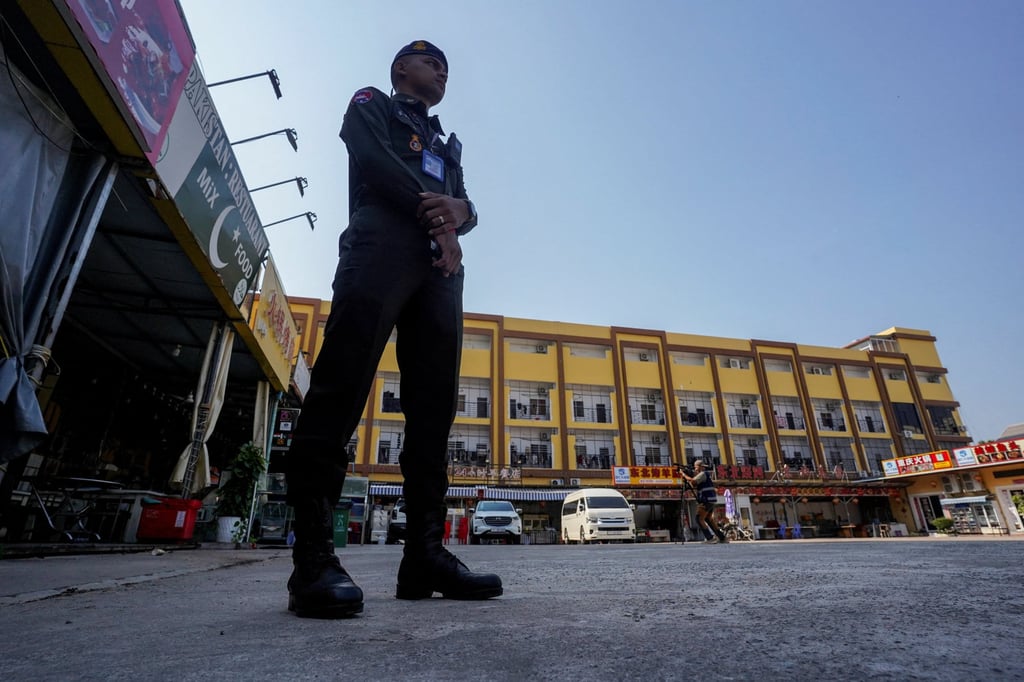
The compound is modern with air conditioning in every room. Inside are a medical clinic, massage parlour, and Vietnamese barbecue, Chinese hotpot and halal eateries – a full range of conveniences.
Yet the residents are gone – and they appear to have fled in haste. Clothes still hang out to dry, while the stench of rotting food lingers.
Located in a secluded area in Kampot province near Cambodia’s border with Vietnam, the site is believed to be a telecoms scam centre.
Cambodian authorities said about 6,000 to 7,000 people had been housed across 31 multi-storey buildings in the compound until January 17, when its alleged boss, former tycoon Ly Kuong, was detained. Thousands fled that day.
The scene is the site of Cambodia’s most extensive crackdown yet on the notorious online scam industry that has long flourished within its borders.
But it also highlights the scale of such operations across Southeast Asia – and points to a rare opportunity for Beijing and Washington to collaborate on dismantling the transnational crime networks that sustain them.
Advertisement
Select Voice
Select Speed
1.00x