Advertisement
China-Japan relations
ChinaDiplomacy

Japan’s defence outreach to counter China’s military rise hits hidden roadblocks

Tokyo’s approach combines security, economic and diplomatic tools to show regional nations an alternative to the China-US dilemma

7-MIN READ7-MIN
12
Listen
After Japan lifted its ban on lethal weapons exports in April, it can sell defence equipment to 17 countries, including six Asean nations.  Photo: EPA
Alyssa Chen
Japan seized the spotlight at last month’s Shangri-La Dialogue, stepping into a vacuum left by the Chinese defence chief – who skipped the forum for a second year – and using the stage to sharpen its warnings over Beijing’s military rise.
Speaking in Singapore on May 31, the final day of the security forum, Japan’s Defence Minister Shinjiro Koizumi pushed back against Beijing’s accusation that Japan is engaging in a “new militarism” and instead took aim at China’s growing military capabilities and lack of transparency.

Japan’s prominence was amplified when a scheduled session on China’s cooperative partnerships in the Asia-Pacific – a slot that would have offered Beijing a platform to present its vision for regional security – was cancelled.
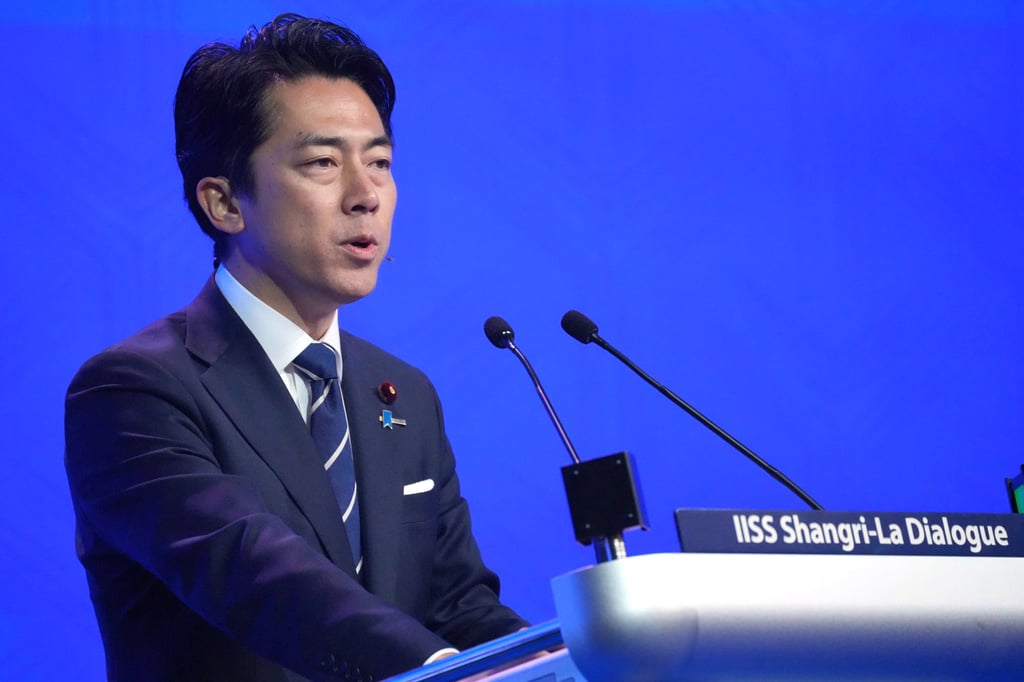
Japan’s Defence Minister Shinjiro Koizumi delivers a speech during the Shangri-La Dialogue in Singapore on May 31. Photo: AP

Tokyo made headlines during the forum when Koizumi took the unusual step of meeting US Defence Secretary Pete Hegseth in a clear bid for public reassurance that Washington remains fully committed to Asia. While it was meant to project a strong, united front between the US and Japan, it exposed Japan’s anxiety about its own security and dependence on the alliance.

In a sign that Tokyo is building the capabilities of a military power, Koizumi and other top officials last year floated the idea of Japan constructing nuclear-powered attack submarines, potentially breaking the country’s nuclear taboo amid suggestions both inside and outside the country that it could eventually acquire nuclear weapons.
Beyond the rhetoric, Tokyo has stepped up its expansion of a network of security partnerships that unnerves Beijing, which views it as a potential threat to regional stability. Japan and the Philippines moved ahead with expanded defence cooperation, including negotiations on an agreement to protect classified military information.
Koizumi also welcomed Wellington’s announcement that an upgraded Japanese Mogami-class frigate had been shortlisted to replace New Zealand’s Anzac-class fleet.

Analysts view these developments as critical links in a multilayered regional military architecture that is being forged as US commitment is perceived as waning across Asia, and amid Beijing’s eagerness to capitalise on the resulting vacuum.

Advertisement
Select Voice
Select Speed
1.00x