Low-hanging fruit and a mountain of debt – how China’s credit binge is playing out
Like many other Chinese cities, Changde has been on an infrastructure spending spree that went well beyond what the government could afford

When Ma Heshui set up a vineyard in central Hunan province with a friend four years ago, they were surrounded by farmland.
They leased 1.6 hectares (four acres) in a quiet spot on Changde’s northernmost edge, 3km (1.9 miles) from its main train station. But as their grapevines developed, so did the city of 6 million – and they watched as a brand new urban centre sprang up around them.
Now, the vineyard sits at the centre of a “new town” covering an area of 27 sq km (10.4 square miles). A 3.3 billion yuan (US$481.8 million) hospital has just opened there, an imposing city hall will follow, and on a recent visit by the South China Morning Post, workers were installing curtain walls on two high-rise buildings that will be the headquarters of the city government’s biggest fundraising vehicle, Changde Caixin Financial Holding Group.
“This is totally beyond my imagination – the whole area developed very quickly after several new main roads were built,” said Ma, a 44-year-old father of two. “But construction of many government projects has really slowed down recently. It seems they’re suddenly running out of money.”
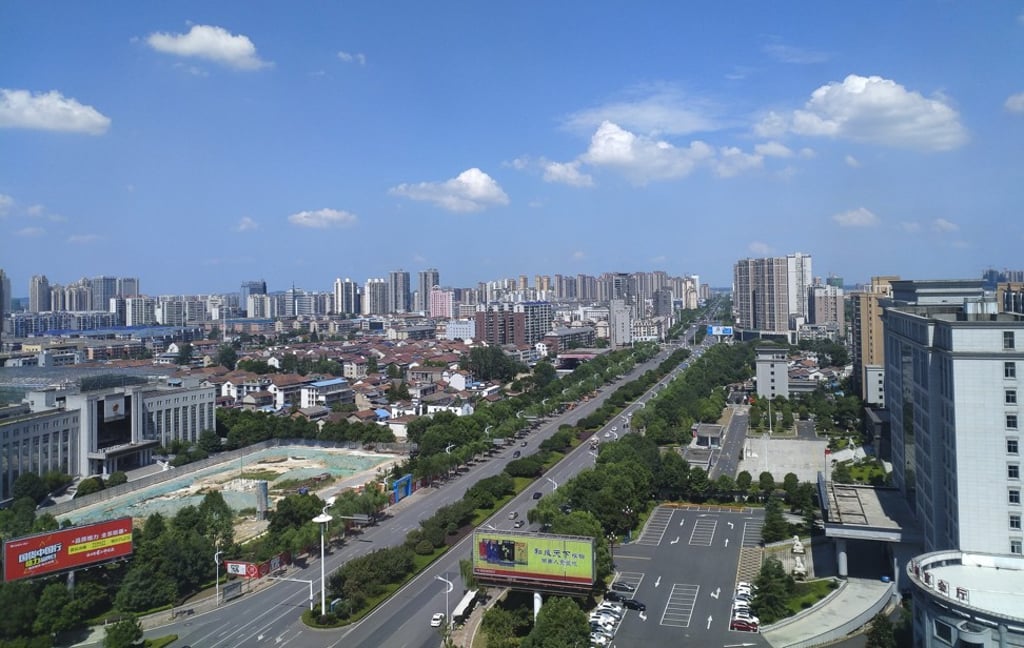
Changde is not the only city where building work is slowing after an infrastructure spending spree driven by local authorities seeking fast development, paid for with easy credit from the state banking system.
Government-led spending on roads, bridges, airports, railways, residential towers, conference centres and sports facilities has helped to propel China’s growth in the last decade, but it has left Beijing with a mountain of debt to deal with. The Bank for International Settlements put total debt at 256 per cent of China’s gross domestic product in mid-2017 – much of it racked up by state-owned enterprises and local governments.