China-US rivalry: Beijing banking on ‘disruptive technologies’ for a military edge, observers say
- Speeding up the development of ‘strategic forward-looking disruptive technologies’ is a focus of the country’s latest five-year plan
- Testing of sixth-generation fighters, quantum radar systems and a prototype rail gun already under way, expert says
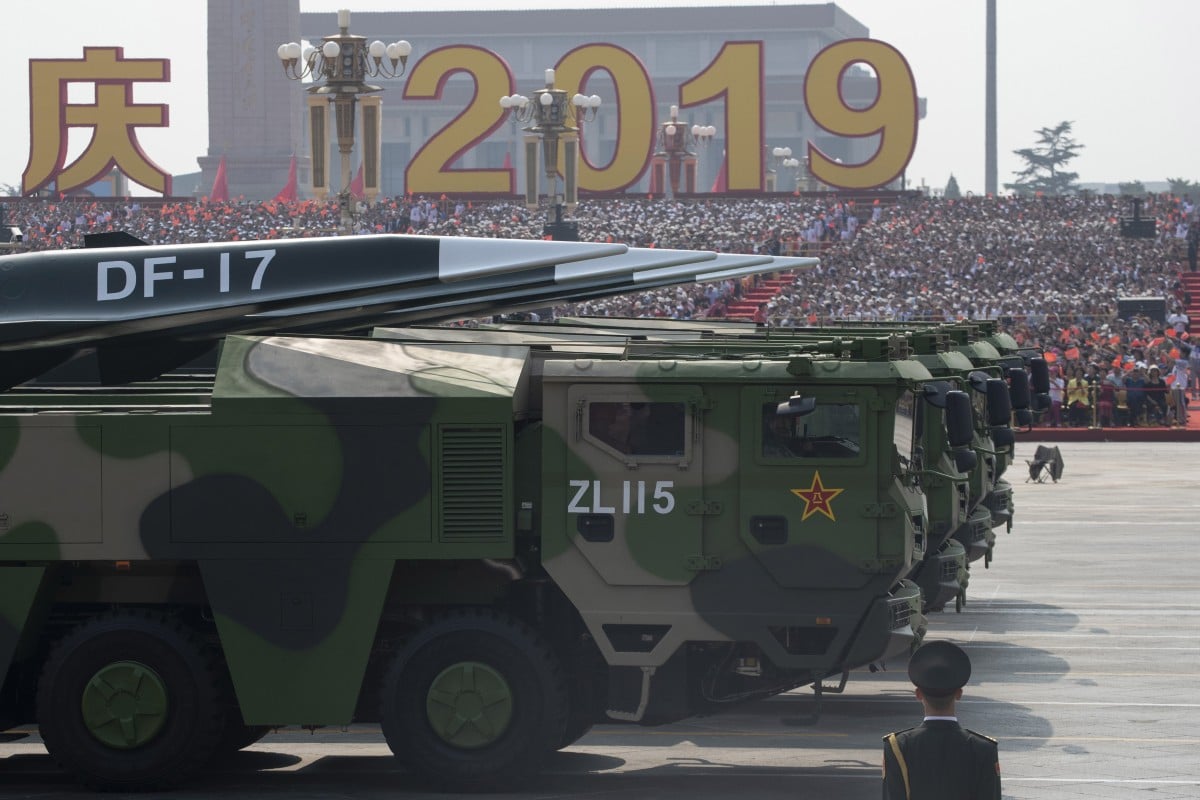
For the first time, the document used the term “disruptive technologies” with regards to its military development. Its predecessor, for 2015-20, focused on civil-military fusion and the modernisation of combat forces.
Among other things, the new plan seeks to “accelerate the modernisation of weapons and equipment, focus on indigenous innovation in national defence science, accelerate the development of strategic forward-looking disruptive technologies, and accelerate the upgrading of weapons and equipment”.
Military observers said the disruptive technologies – those that fundamentally change the status quo – might include such things as sixth-generation fighters, high-energy weapons like laser and rail guns, quantum radar and communications systems, new stealth materials, autonomous combat robots, orbital spacecraft, and biological technologies such as prosthetics and powered exoskeletons.
Wang Haifeng, chief technology officer at Aviation Industry Corp, China’s state-owned aerospace and defence conglomerate, said last year that the development of a sixth-generation fighter had already begun.
There have also been reports that a prototype rail gun has been installed on a test ship, a quantum radar system capable of detecting stealth aircraft has undergone trials, and progress has been made in the development of technologies related to spacecraft, such as scramjet engines.