China’s nuclear threat to US grows, mainly in the risk of a mishap, experts say
- Testimony to the US-China Economic and Security Review Commission includes ways a skirmish, perhaps over Taiwan, could spin out of control
- ‘A more competitive US-China relationship’ could increase chances of conflict, panel is told
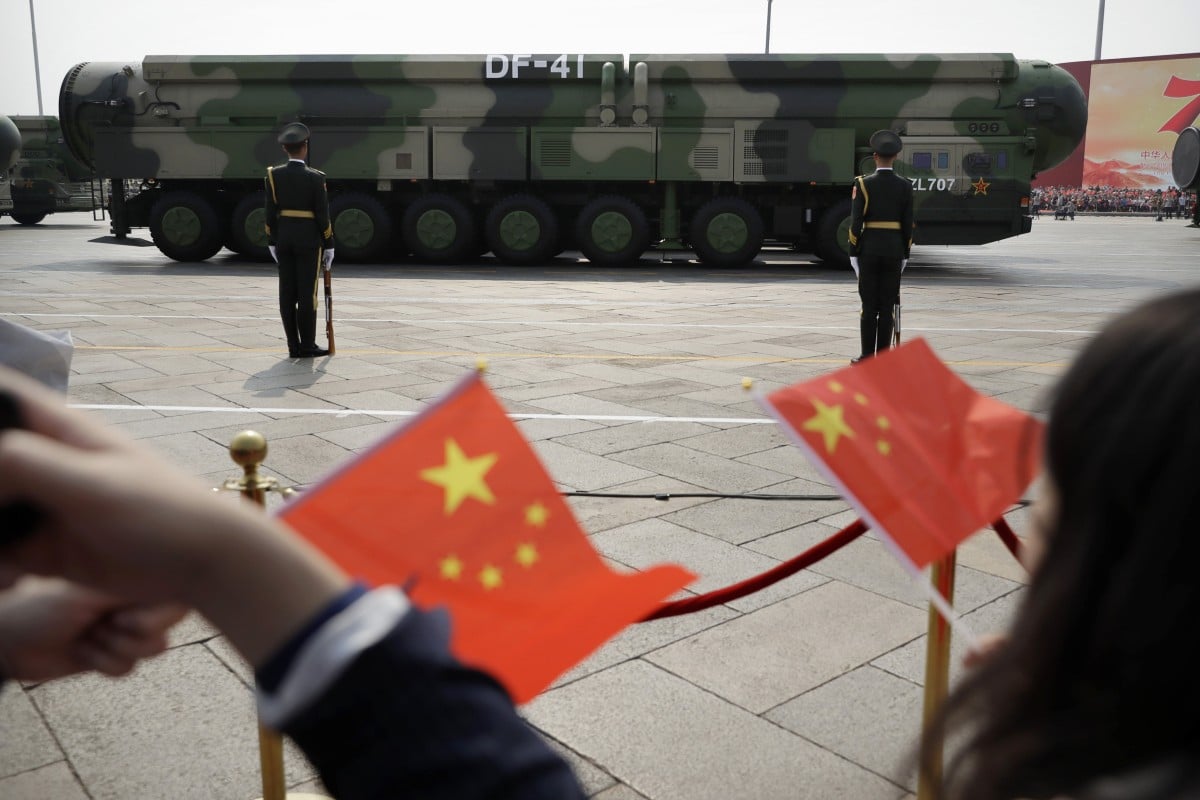
China’s nuclear arsenal is a growing threat to US security, less in its absolute size than in the growing risk of a mishap as Washington and Beijing butt heads over Taiwan and many other issues, experts told a US Congressional commission on Thursday.
As Moscow and Washington engaged over decades in a high-stakes nuclear arms race, China traditionally remained on the sidelines.

04:07
Alaska summit: China tells US not to underestimate Beijing’s will to safeguard national dignity
Since its first nuclear weapon test in 1964, it has repeatedly laid out a no first-strike, minimal deterrence policy, viewing its relatively modest arsenal as a way to “deter other countries from using nuclear weapons against China”, as outlined in a 2013 white paper published by Beijing.
But China’s growing economic, military and political might, its technology ambitions and the successful lobbying by its navy and air force to have their own nuclear forces have altered the equation.
A particular concern is that Beijing may edge or be pushed toward a policy – advocated by some in the People’s Liberation Army (PLA) – of launching weapons at the first sign of a possible attack, increasing the risk of unintended consequences.