Can Sino-US relations survive calls for more scrutiny of Chinese investment in America?
US reviews of inbound investment from China set up a clash between Beijing and Washington by threatening to block Chinese acquisitions of US technology

A missile defence system causing Washington and Beijing to clash on efforts to stall North Korea’s weapons testing programme has, at its core, technology that prompted US government action against China on another front: bilateral investment.
The Terminal High Altitude Area Defence, or THAAD, missile system deployed in South Korea leverages a “cutting edge” technology that magnifies the power of radar systems, according to a February report by the Washington-based Peterson Institute for International Economics (PIIE).
When a consortium including Nanchang Industrial Group of China tried to acquire a division of Dutch electronics company Philips, the US government blocked the transaction, presumably on the grounds that the unit of Philips, which has substantial operations in the US, was developing the radar-boosting technology now used in THAAD, the report said.
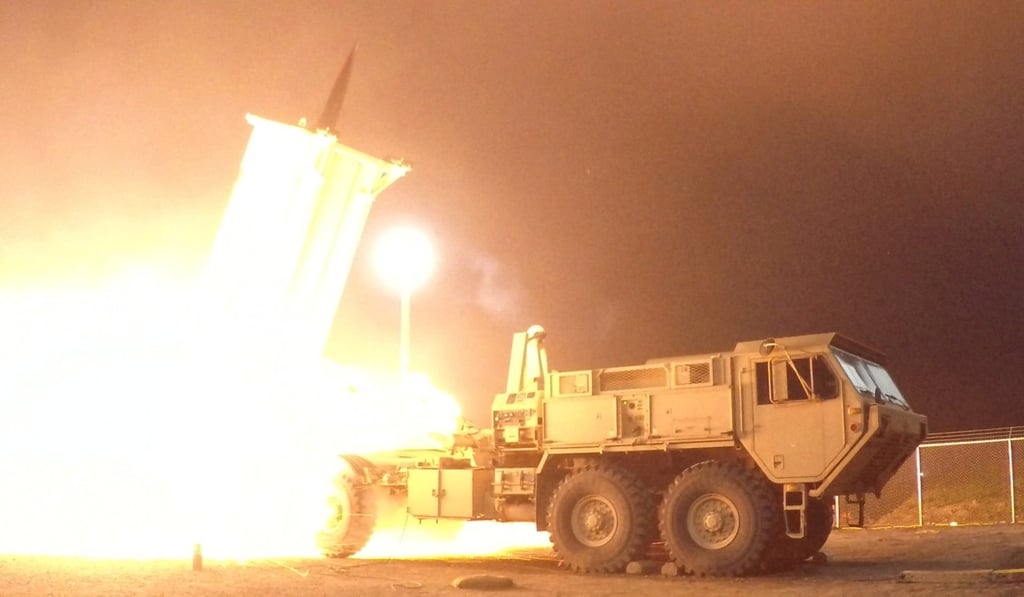
Beijing’s calls for the US and Seoul to dismantle the THAAD system in South Korea have intensified with the escalation of tensions around Pyongyang’s weapons testing programme.
In an emergency UN Security Council meeting this week, called to condemn North Korea’s launch of a missile over one of Japan’s largest islands, China’s UN Ambassador Liu Jieyi went even further, demanding an “immediate” dismantling of THAAD as part of efforts to de-escalate the North Korea crisis.