China’s failed Long March 5 rocket ‘choked to death’, but space mission expected to resume this year
Problem that caused heavy-lift rocket to plunge into Pacific Ocean in July has been resolved, official report says

The failure of China’s most powerful rocket, which plunged into the Pacific Ocean soon after launch last summer, was caused by an oxygen supply problem, an expert said on Monday after the release of the findings of an official investigation.
According to a short statement posted on the website of the State Administration of Science, Technology and Industry for National Defence, just six minutes after blasting off from the Wenchang Space Launch Centre in Hainan province on July 2, the first stage of the heavy-lift Long March 5 rocket “suddenly lost a significant amount of thrust”.
The problem was caused by a turbofan in one of the main engines, the statement said.
“Under the environment of sophisticated pressure and heat, certain structures [on the turbo system] experienced abnormal changes,” it said, without elaborating.
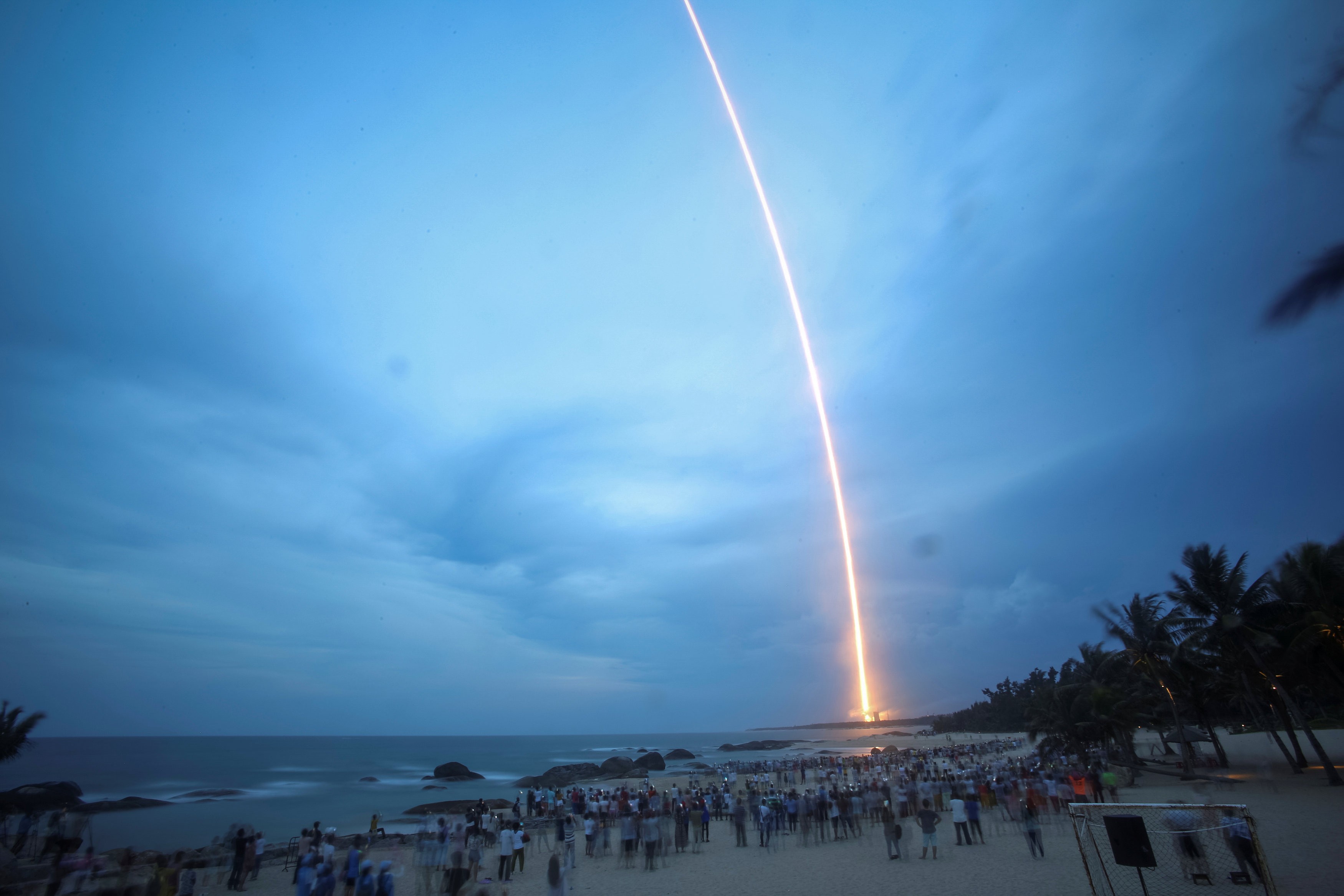
The failure of the rocket was seen as a huge setback for China’s space programme, including the deployment of super-heavy military satellites, the construction of a space station and collecting samples from the moon. However, the government said on Monday that the problem had been resolved and that a new generation of the Long March 5 rocket was in production and would be ready to launch, on an unspecified mission, by the end of the year.