Are Xi Jinping’s demands for Communist Party loyalty a bigger threat to China than Donald Trump’s trade war?
Beijing’s centralisation campaign could end up sapping dynamism from the world’s second-biggest economy, critics say

As Chinese officials prepared a response to US President Donald Trump’s latest tariffs, they spent hundreds of hours over the past few months on another urgent task: showing their fealty to President Xi Jinping.
In a meeting room in one government ministry in Beijing, officials stacked up piles of papers across a long meeting table to prepare a submission to Xi’s ruling Communist Party. The documents, painstakingly compiled from materials detailing party-government interactions over the last five years, were designed to demonstrate that the ministry had followed the party’s instructions, according to two people involved in the process.
The exercise came as part of Xi’s bid to consolidate power in the nation of 1.4 billion people, where he is now China’s most powerful leader since Mao Zedong. It is part of a wider campaign announced in March to revamp the government – both in Beijing and administrations in far-reaching provinces – to ensure it obeys the party’s wishes.
Xi’s success at exerting control over China’s vast bureaucracy stands in sharp contrast to Trump, who has faced resistance to some of his policies from officials within his administration. Generally, investors have viewed this is as a good thing: it allows Xi to rein in local government debt, collect more taxes and implement environmental regulations.
“From a markets perspective, the economy needs this,” said Jonas Short, who heads the Beijing office of Everbright Sun Hung Kai, a financial services firm. “The central government needs to have stronger rein over local government to stop intermittent blow-ups from local government causing instability for the whole country.”
But some analysts in Beijing worry that the centralisation campaign could end up going too far, sapping dynamism from the world’s second-biggest economy. China’s growth spurt began after reforms in the late 1970s, when officials in Beijing allowed provincial officials to experiment with market-based reforms.
“In the longer term, centralisation is a bigger risk for China’s development than the trade war,” said Ether Yin, a partner at advisory firm Trivium China in Beijing. “If they keep going with centralisation, all the provinces will have to adjust their economic structure based on central government policies and orders. That kind of diversity might gradually vanish, and that’s not good for the economy in the long run.”
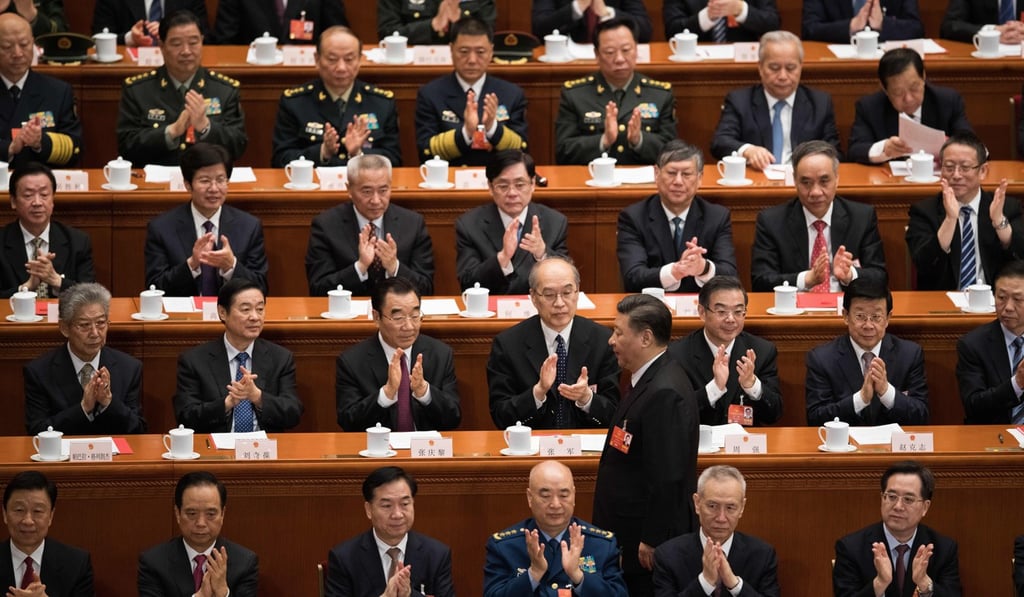
Xi has put himself at the centre of the party since taking power in 2012, designating himself as its “core” and heading dozens of policy committees. The legislature also abolished presidential term limits, enshrined his signature policies in the country’s constitution and laid out a 30-year development plan.
A new body created this year known as the National Supervisory Commission institutionalised an anti-corruption campaign that punishes wayward party members, threatening jail terms or termination for officials who resist central orders. It submitted a report in late July detailing how cadres across the board – from localities to state-run enterprises – frequently failed to follow party instructions and show sufficient loyalty to Xi.