China’s Xinjiang ‘ethnic unity village’ shows cracks in facade
- Incentives to move to settlements promoting shared prosperity for Uygurs and Han, but concerns of a government campaign to erode Central Asian groups
- Little sign of Muslim identity, with some disowning their past in presence of government observers

In this corner of China’s far west, rows of identical white concrete houses with red metal roofs rise abruptly above the sand dunes of the harsh Taklamakan Desert. A Chinese flag flutters above the settlement, and a billboard at the entrance reads, “Welcome to the Hotan Unity New Village.”
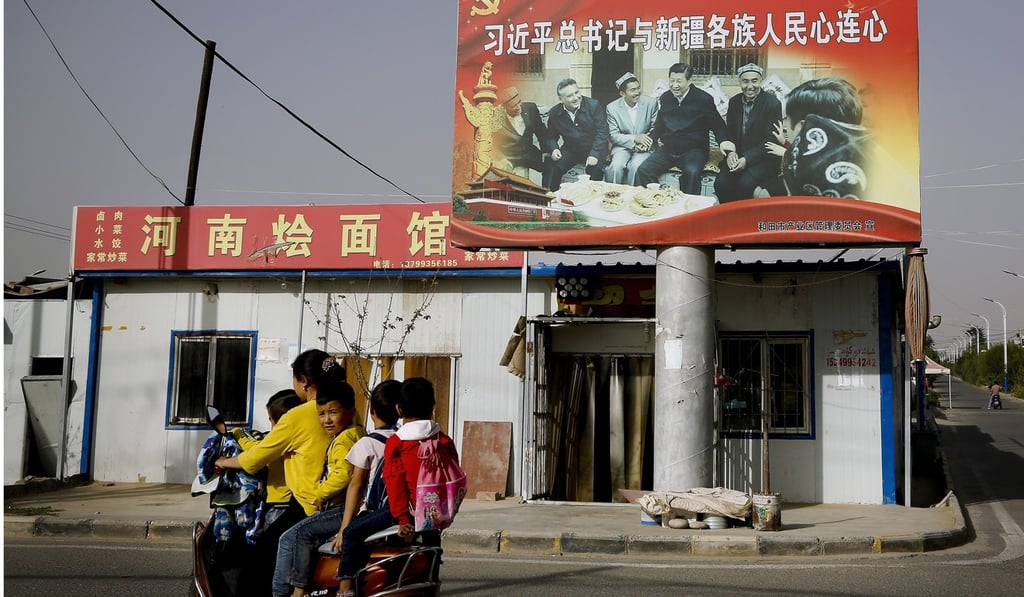
This is a Communist Party showcase for its efforts to tame Xinjiang, the heartland of China’s often restive Uygur Muslim minority and an unforgiving terrain. The free or low-cost houses are assigned alternately to Uygurs and Han, who work side-by-side in greenhouses and send their children to school together.
It is the future the party envisions for Xinjiang after a massive security crackdown that has sent by some estimates more than a million Muslims to internment camps, and many of their children to orphanages.
But a closer look at what the party calls “ethnic unity” reveals what isn’t there: mosques for Muslim worshippers, or traditional Uygur brick homes, often adorned with pointed arches and carved decorations. In their place are colourful murals of what authorities consider to be scenes of unity, such as a Uygur man and his family holding a Chinese flag.
In the village’s new public square, Uygur children banter with Han children in fluent Mandarin, the language of the Han majority, rather than in their native tongue. Young Uygur women wear Western clothing without the headscarves that are part of traditional Muslim dress.