Air pollution spike in China’s Henan province blamed on bad weather
- Levels of dangerous PM2.5 particles in nine cities up 12 per cent year on year in December
- Emissions in cities home to several big steel, aluminium and coal-producing districts soared by 107 per cent in November

Air pollution in China’s heavy-industrial province of Henan worsened in December even as other regions improved, official data showed, with its cities hit by unfavourable weather and a struggle to find cleaner sources of economic growth.
China is restricting industrial output, traffic and coal consumption in the smog-prone north for a second year in a bid to cut pollution during the winter heating period, when thousands of mainly coal-burning boilers are switched on.
But nine cities in Henan, home to about 95 million people, still recorded a rise in small, lung-damaging emissions known as PM2.5 to an average of 82 micrograms per cubic metre in the last month of 2018, up 12 per cent from a year earlier.
Emissions in the cities – which include several big steel, aluminium and coal-producing districts – had already soared by 107 per cent from a year earlier in November, according to a Reuters analysis of official data.
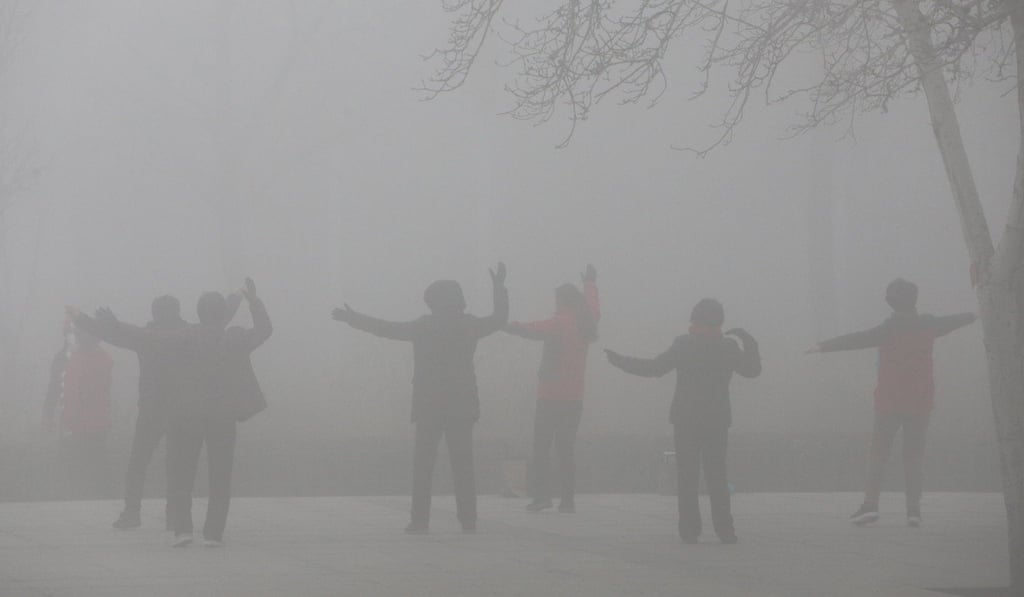
As many as 79 cities throughout the north and east have drawn up plans to control smog this winter, with many committed to cutting PM2.5 emissions by 3 per cent from last year.
For these cities, average PM2.5 levels fell 18 per cent in December from a year earlier to 66mcg per cubic metre, according to Reuters calculations, although still nearly double China’s national standard of 35mcg.