Small factories in northern China count the cost of Beijing’s war on pollution
- Workshops in Shijiazhuang, Hebei were told to halt production in November to help curb smog over winter – but machinery still lies idle at some
- One factory manager puts losses at US$298,000 and says he’s had to lay off dozens of workers at his foundry

On a sunny day in March, a factory manager stood outside his small foundry at an industrial park in northern China. Surveying his 2 million yuan (US$298,000) dust collection equipment lying idle, the 54-year-old, surnamed Zhang, was downcast.
“I just don’t get it,” said Zhang, who did not want to give his full name. “If we’re not allowed to produce, why [make us] invest in these facilities?”
Early last month, Zhang and other producers in Yuanshi received a text message from a county official saying: “Right now we have four inspection teams from the Ministry of Ecology and Environment and the provincial government carrying out inspections in our county. All businesses must pay attention [to controlling emissions].”
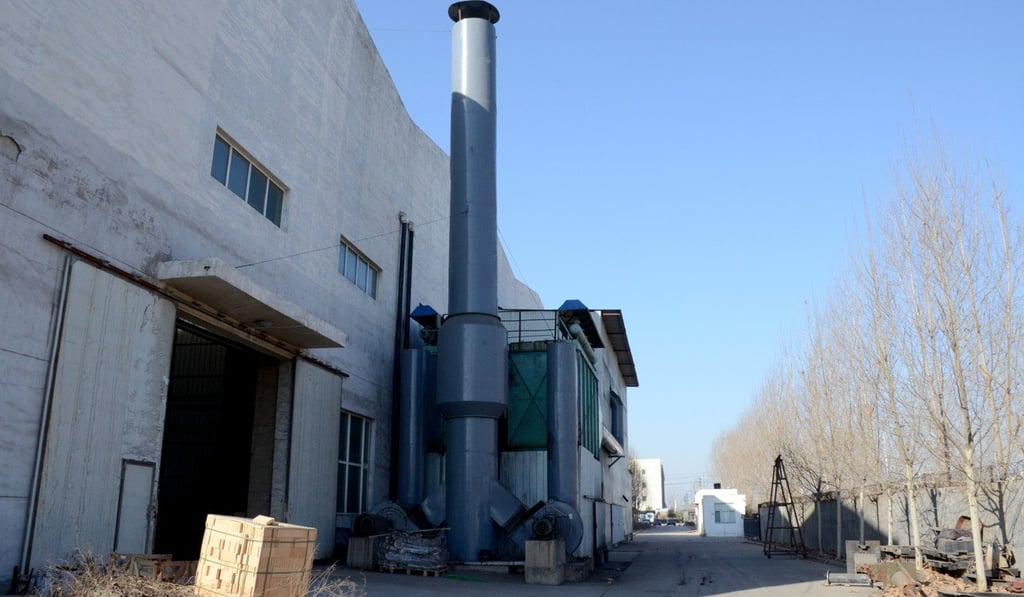
With most factories closed because of the production ban, the industrial park was almost deserted when the South China Morning Post visited in March. At a metal casting plant run by Naili, which makes air compressors, half a dozen workers were having a long lunch under a makeshift tent. They said they had not worked normal hours for months, while others were staying home until they were told to return to work.