What China must do to clean up its act on waste water
- Inadequate infrastructure and industry standards are holding the country back in the battle to save the environment, new study finds
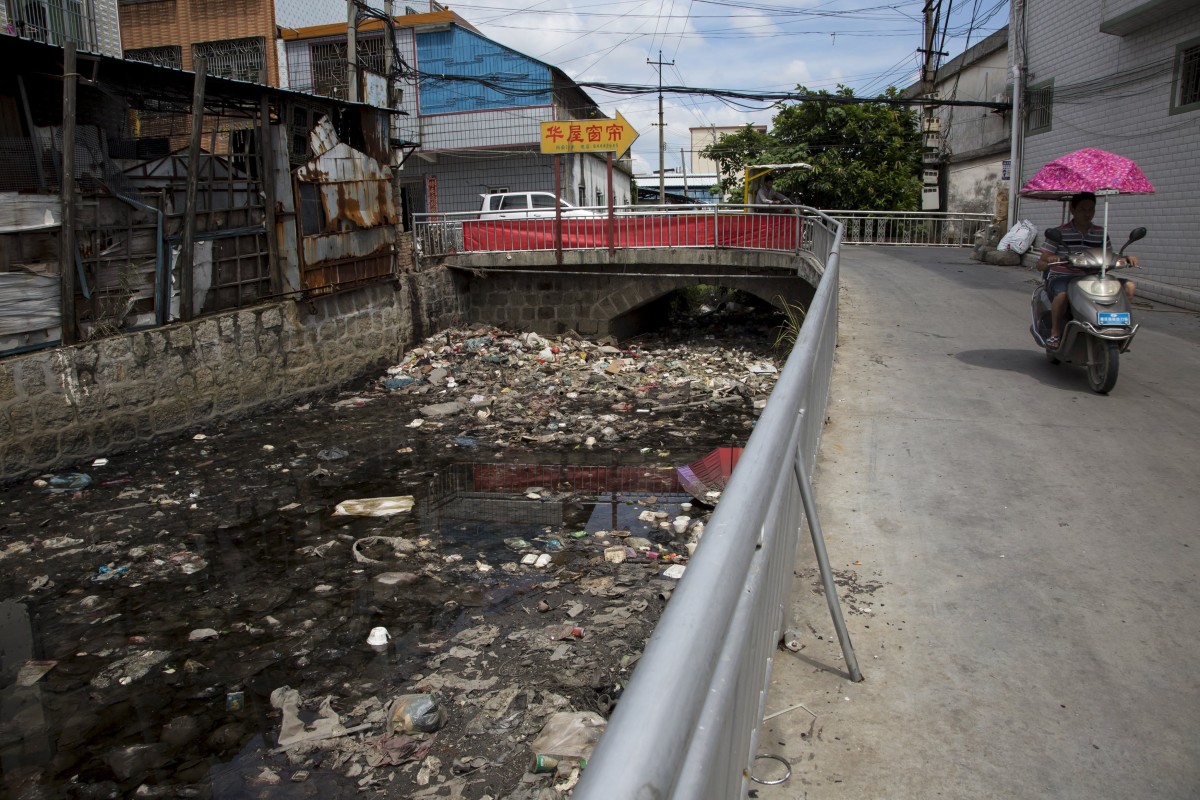
A shortage of waste water pipelines, lax local government oversight and a lack of industry standards are holding back efforts to cut industrial water pollution in China, according to a new joint study.
The research by Greenpeace and Nanjing University also found that many of the country’s waste water treatment plants were among its biggest polluters singled out by authorities.
Researchers made the assessment by examining data and reports released by the Ministry of Ecology and Environment last year. According to the reports, 243 – or 56 per cent – of the 436 major polluters fined in 2018 for excessive discharges were waste water treatment plants.
That is despite Beijing claiming to be one of the biggest processors of industrial and household waste water by volume in the world.
Fighting water pollution is part of Beijing’s pledge to fix the country’s depleted environment by 2020, one of the priorities President Xi Jinping identified at the start of his second five-year term in late 2017.
Dong Zhanfeng, deputy director of the Environmental Policy Department at the Chinese Academy for Environmental Planning, said waste water treatment was an important part of the fight against pollution.