Tiny Muslim community in China’s Hainan becomes latest target for religious crackdown
- The Utsuls of Hainan island are only around 10,000 strong, but are now facing increasing surveillance and a crackdown on traditional clothing
- China’s treatment of Uygurs in Xinjiang is the main focus of international alarm, but Sinicisation policies have targeted a wide range of minorities
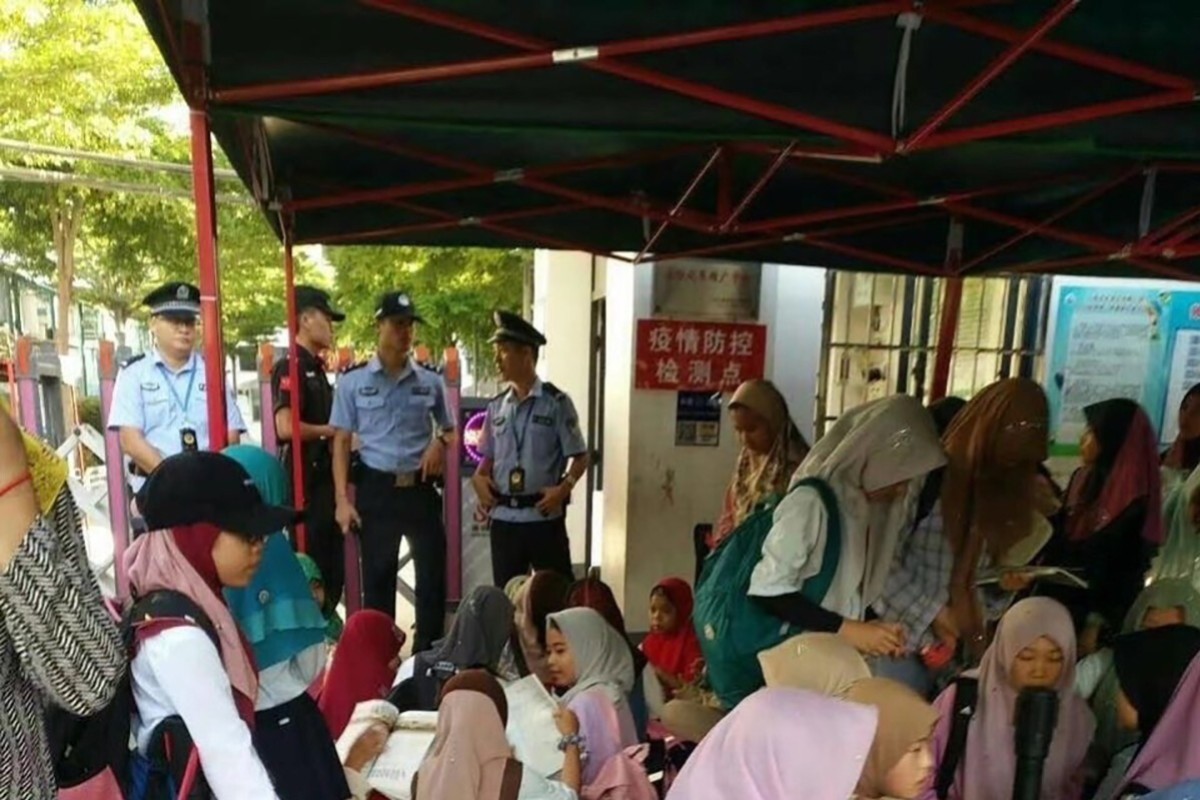
The latest moves banning traditional dress in schools and government offices targeted the Utsuls, a little-known population of around 10,000 people based in Sanya, a city on the island province of Hainan, almost 12,000km (7,400 miles) from Xinjiang.
Communist Party documents also suggest the authorities will increase their surveillance of residents in Muslim neighbourhoods to “resolve problems” and tighter restrictions on religious and “Arabic” architecture will be imposed.
An order banning the hijab from schools prompted protests from schools in Utsul neighbourhoods earlier this month, and pictures and videos circulating on Chinese social media showed a group of girls wearing headscarves reading from text books outside Tianya Utsul primary school while surrounded by police officers.

“The official line is that no ethnic minority can wear traditional garments on school grounds but other ethnic minorities [in Sanya] don’t wear traditional garments in their daily life so it’s makes no difference to them but to us the hijab is an integral part of our culture, if we take it off it’s like stripping off our clothes,” said an Utsul community worker, who requested anonymity due to the sensitivity of the matter.