Will China’s ‘official’ Panchen Lama, now 30, take a bigger role in Tibet?
- Beijing selected Gyaincain Norbu in 1995 to be the second-highest figure in the spiritual hierarchy, rejecting the boy identified by the Dalai Lama
- He’s a member of a top Communist Party advisory body but a Chinese government adviser says he is unlikely to have much political influence

A decade ago, after he was appointed as a 20-year-old to a top advisory body, the Standing Committee of the Chinese People’s Political Consultative Conference, there was speculation that he would follow in his predecessor’s footsteps and eventually become a state leader.
The Chinese government has since then tried to make Gyaincain Norbu an official face of Tibetan Buddhism. He took his first trip outside the mainland in 2012, visiting Hong Kong for the Third World Buddhist Forum. In May last year he travelled to Bangkok, giving a speech at a Buddhist university and attending other events. Also in 2019, he was named head of the Tibet branch of the Buddhist Association of China, which oversees all monasteries in the Himalayan region.
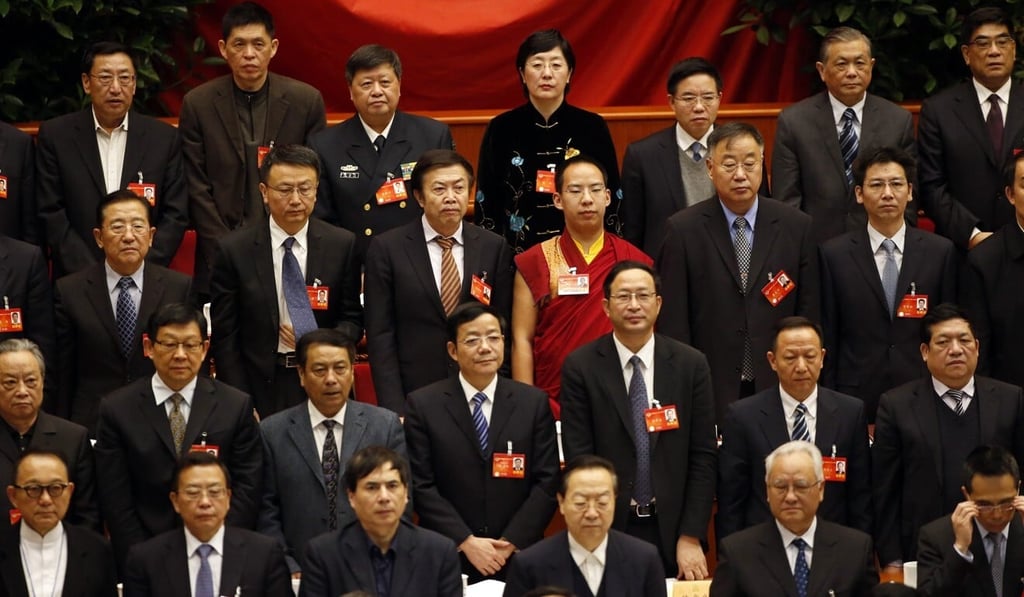
While it is no secret that Beijing has wanted him to eventually take the place of the 14th Dalai Lama – Tibet’s exiled spiritual leader who is now 85 – there is so far no sign that Gyaincain Norbu has any political influence. The party’s Tibet policy has shifted in recent years to become less reliant on religious figures to keep the restive region under control, and according to a Chinese government adviser, it is unlikely Gyaincain Norbu will take on any major political role in the future.
Far from that, Tibet scholar Robbie Barnett noted that the Panchen Lama had been “educated” about the importance of party leadership in August, during a meeting with the region’s chief, Wu Yingjie.